Speed Over Scale: How Resource Scarcity Is Reshaping Southeast Asia's Nuclear Market
Southeast Asia's nuclear buildout is usually described as one shared opportunity, a $208 billion pipeline spread across Vietnam, the Philippines, Thailand, Malaysia, and Indonesia, all moving toward a combined 25 GW of capacity by mid-century. That framing treats the five countries as five separate slices of the same pie, each pursuing its own programme without much bearing on the others. Underneath that framing sits a less comfortable reality. These five countries are not only building nuclear power. They are competing with each other, in real time, for the same narrow pool of global resources that none of them can scale on demand: experienced vendors, licensed international financiers, and trained nuclear personnel.
The Real Constraint Is Not Demand. It is Delivery Capacity.
Global capacity to actually deliver a nuclear programme is finite, and it does not expand simply because more countries decide they want a reactor at the same time. Licensed nuclear engineers, qualified safety inspectors, and experienced regulatory reviewers take years to train, a lead time that does not compress no matter how many countries need that expertise simultaneously. The same is true of financiers. A relatively small number of institutions currently have real nuclear project finance experience and export credit agency relationships suited to this kind of build, and that pool did not grow overnight even after the World Bank lifted its ban on nuclear project financing in June 2025. Reactor vendors face the same limit from a different direction. A vendor's engineering teams, project managers, and construction crews can only be deployed to so many active projects at once before quality and schedule both start to suffer.
South Korea's KHNP illustrates the point directly. It is simultaneously working a tripartite arrangement with KEXIM and Meralco in the Philippines and a separate MOU with the Electricity Generating Authority of Thailand covering SMR technology study and workforce development. Both relationships are real and both are moving. But KHNP's engineering and project management bandwidth is not infinite, and the Philippines and Thailand are, in effect, drawing on the same finite institutional capacity at the same time. Whichever country's project reaches financial close and construction readiness first is likely to receive the fuller share of that attention going forward, simply because a vendor's best people follow the project that is actually moving.
Financing Follows the Same Pattern
The financing side works the same way. Every one of the five active programmes still needs a fully structured financing solution, and every one of them is, to some degree, approaching the same limited set of export credit agencies and multilateral lenders to get there. An institution with genuine nuclear project finance experience can only carry so many live mandates at once, and a country that closes its financing structure first effectively claims priority attention from that institution for the years of disbursement and monitoring that follow. A country still negotiating terms two years later is not just behind on its own timeline. It is negotiating with a financier who is now largely occupied servicing an earlier deal elsewhere in the region.
This dynamic does not show up in comparisons of national capacity targets or headline investment figures, because those numbers describe ambition, not the availability of the people and institutions required to execute it. Two countries can have identical capacity targets and radically different odds of hitting them, depending on how early each one locked in scarce financing and vendor attention relative to the other four competing for the same resources.
Why Moving First Matters More Than Moving Big
For a company deciding where to commit resources in Southeast Asia, this changes the calculation in a specific way. The instinct is often to wait and see which country's programme looks the most credible or the largest before committing serious business development effort there. That instinct is backwards in a resource-constrained race. The country that is moving fastest right now, regardless of its eventual capacity target, is the one currently absorbing the region's limited supply of vendor engineering hours, financier attention, and trained personnel. A firm that builds a relationship with that programme early is aligning itself with the buyer most likely to actually receive the resources needed to execute, not merely the buyer with the most attractive long-term ambition.
This also means the five countries are not purely partners in a shared regional opportunity, even though most of the public narrative treats them that way. A financier's decision to prioritize one country's mandate is, in effect, a decision to deprioritize another's, at least in the near term. A vendor's decision to staff up for one project fully is a decision to staff another more thinly. Firms serving this region need to track not just each country's own progress, but how that progress is shifting the availability of the vendors, financiers, and workforce every other country in the region is also trying to secure.
The Practical Takeaway
The scarce resource in Southeast Asia's nuclear market is not capital in the aggregate, and it is not reactor technology. It is the limited, slow-to-expand pool of people and institutions capable of actually delivering a first nuclear project on schedule. Firms that understand this should prioritize speed of engagement with whichever country's programme is currently moving, rather than waiting for a clearer signal of which market will ultimately be largest, because the resources that determine execution success are being claimed now, by whichever country gets there first.
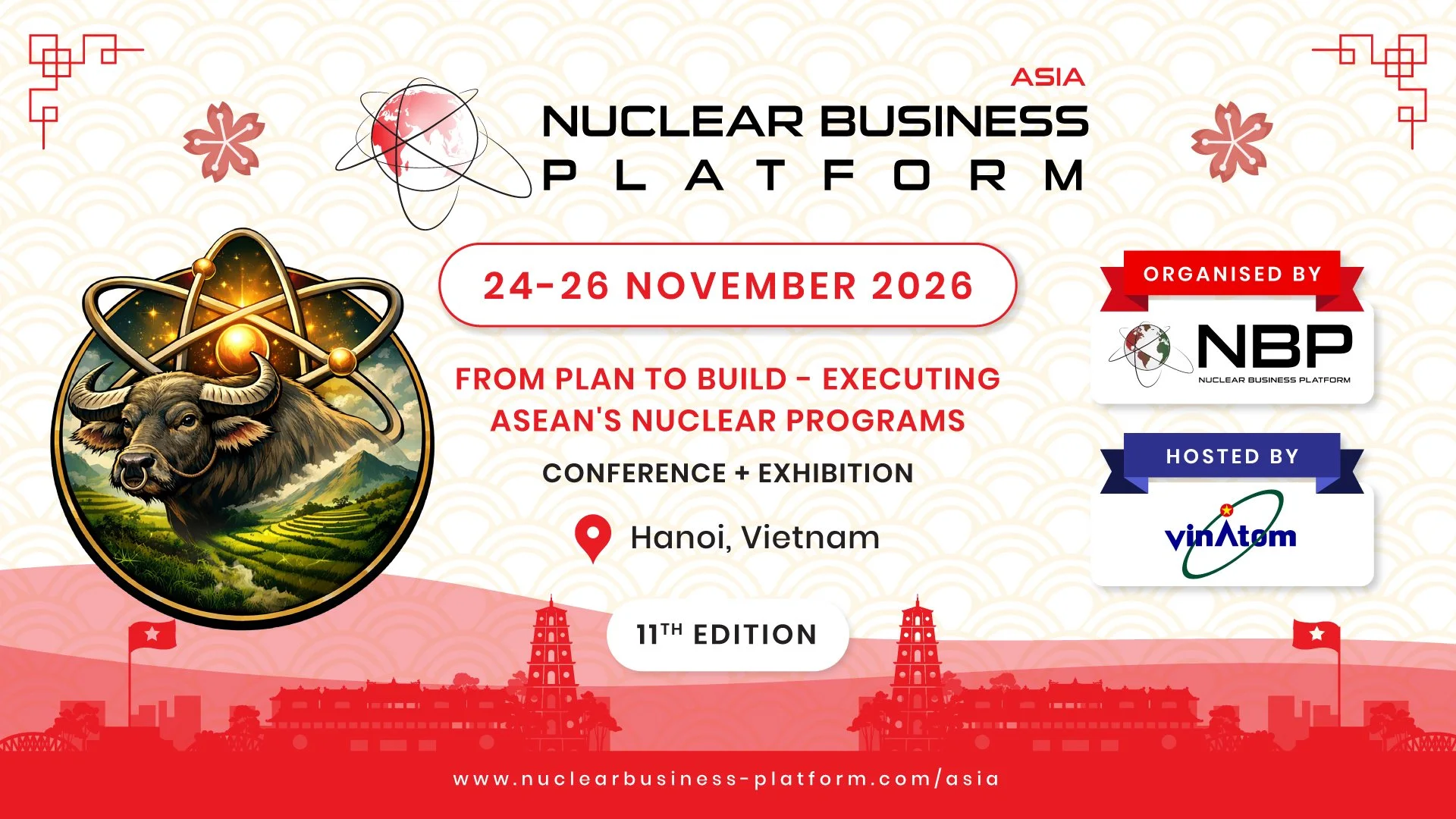
NBP's Asia Nuclear Business Platform (ANBP) runs in Hanoi from 24 to 26 November 2026, at a point when several of these countries are actively competing for the same vendor and financier attention. For firms trying to judge which of the five programmes is actually positioned to execute, rather than simply to announce, that is where the difference becomes visible.