
NBP periodically publishes short articles on nuclear energy matters which either have a geographic or topical focus. Feel free to browse through all our articles and if you would like to read on something specific, please use the search function. For example, you can search for articles relating to Africa or India or financing or SMR etc. You can also use the filter function to see articles pertaining to Asia, Africa, India or Türkiye.
Malaysia's Nuclear Decision Will Ripple Across a $208 Billion Regional Market
Malaysia's 1.2 GW SMR pathway is a gateway to ASEAN's $208B nuclear market. First-mover status = regional reference position. NEPIO since 2011, Phase 1 IAEA groundwork complete, US MOU July 2025, PETRA feasibility underway. Fossil-reliant grid + net-zero by 2050 = strong case for firm low-carbon power.
Vietnam's Nuclear Programme: A Decade-Long Business Relationship
Vietnam has moved its nuclear programme from legislative revival to active construction in 2026: an IGA with Russia for Ninh Thuan 1, site clearance underway, a Korean financing MOU for Ninh Thuan 2, and the only completed IAEA INIR Phase 2 review in ASEAN.
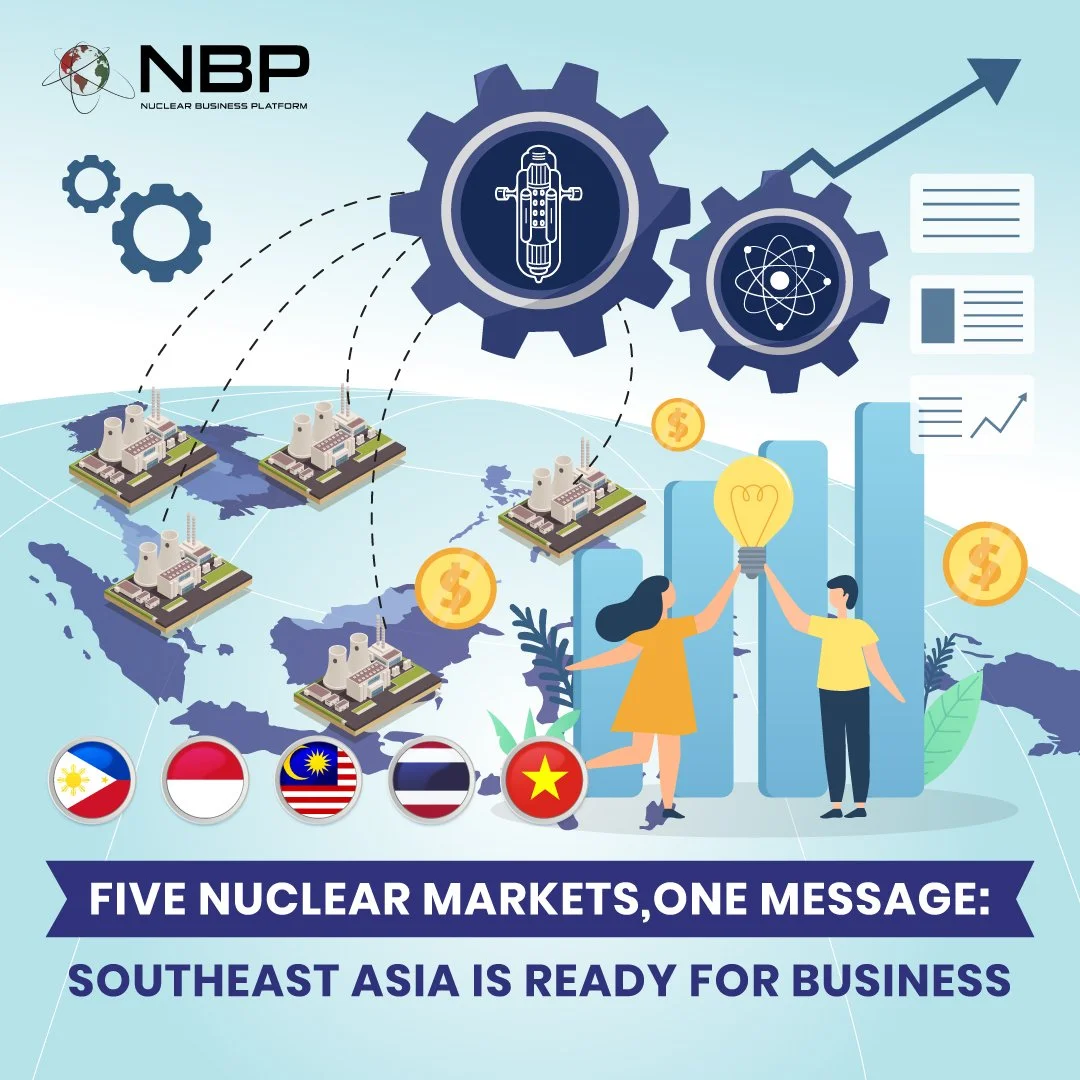
Five Nuclear Markets, One Message: Southeast Asia Is Ready for Business
Southeast Asia's nuclear market has moved from forecast to active commercial reality in 2026. Vietnam, the Philippines, Thailand, Malaysia, and Indonesia are signing binding agreements across a USD 208 billion pipeline.
Vietnam Could Be the First Country in ASEAN to Operate a Nuclear Power Plant. The Evidence Is Getting Hard to Ignore
Vietnam's nuclear programme crossed a threshold in 2026: Ninh Thuan 1 IGA with Russia (March 2026), site clearance in Khanh Hoa active, 4-party Korean MOU for Ninh Thuan 2 within months of Japan's exit, IAEA INIR Phase 2 complete (only ASEAN nation). $22B programme. Two supply chain environments open.
Why Stakeholder Engagement Will Decide Who Wins ASEAN's Nuclear Race
ASEAN's $208B nuclear race won't be decided by the best reactor — it'll be decided by the deepest stakeholder relationships. Philippines (123 + USTDA live, but Meralco also signed KHNP MOU). Indonesia (regulatory sequencing). Malaysia (US MOU July 2025). Thailand (123 in force). Vietnam (Ninh Thuan 2 open after Rosatom won Unit 1).
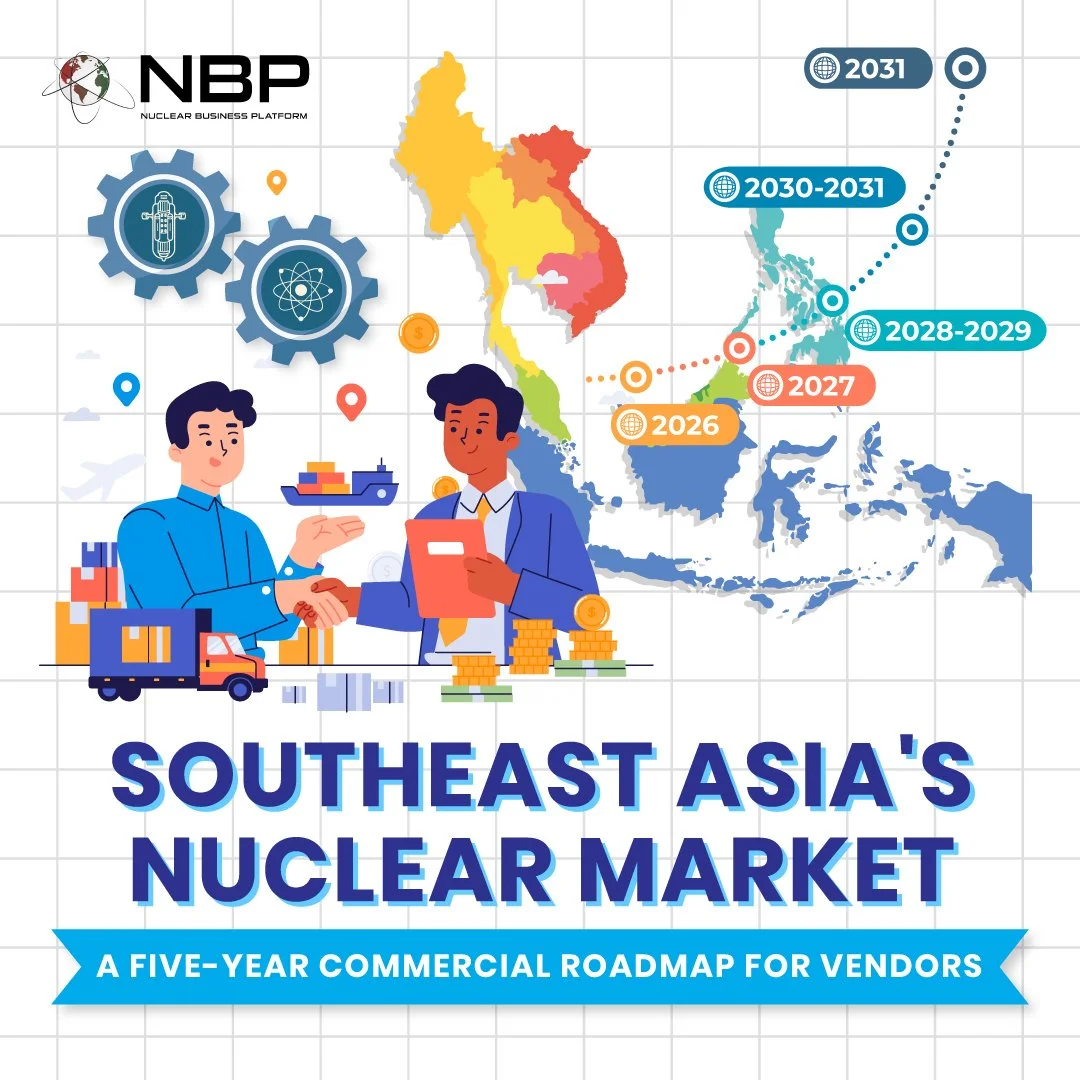
Southeast Asia's Nuclear Market: A Five-Year Commercial Roadmap for Vendors
Southeast Asia's USD 208B nuclear market runs on a calendar, not a pipeline. 2026: feasibility studies conclude across 🇵🇭 🇲🇾 🇻🇳 🇮🇩. 2027: 🇵🇭 & 🇹🇭 vendor selection. 2028–29: 🇻🇳 Ninh Thuan 2 + 🇮🇩 industrial SMR. 2030–31: 🇲🇾 procurement + regional supply chain consolidation. Vendors absent in 2026 will find the best 2031 positions already taken.
How Western Vendors Can Win Southeast Asia's $208 Billion Nuclear Market
Southeast Asia needs $208B to develop 25 GW of nuclear by 2050. Philippines and Malaysia have US frameworks in place. Vietnam's Ninh Thuan 1 went to Russia (23 March 2026) but Ninh Thuan 2 is open. Indonesia targets 44 GW by 2060 including 9 GW for hydrogen. Western vendors must lead with financing + localisation.
ASEAN's SMR Market Is Open. Four Things Vendors Must Get Right Before It Isn't.
ASEAN's SMR market spans Philippines, Vietnam, Indonesia, Malaysia and Thailand — all at different procurement stages. Four non-negotiables for vendors: integrated financing, localisation, regulatory partnership, and HALEU supply certainty. Vietnam is the most open window now.
Why South Korea Is ASEAN's Most Complete Nuclear Partner
South Korea has the most complete nuclear offering in ASEAN: Barakah as the region's most relevant reference project, a full portfolio from APR-1400 to 170 MWe i-SMR (SDA submitted March 2026), and KEXIM integrated financing. March 2026 MoUs with Singapore's EMA and Meralco cement its lead.
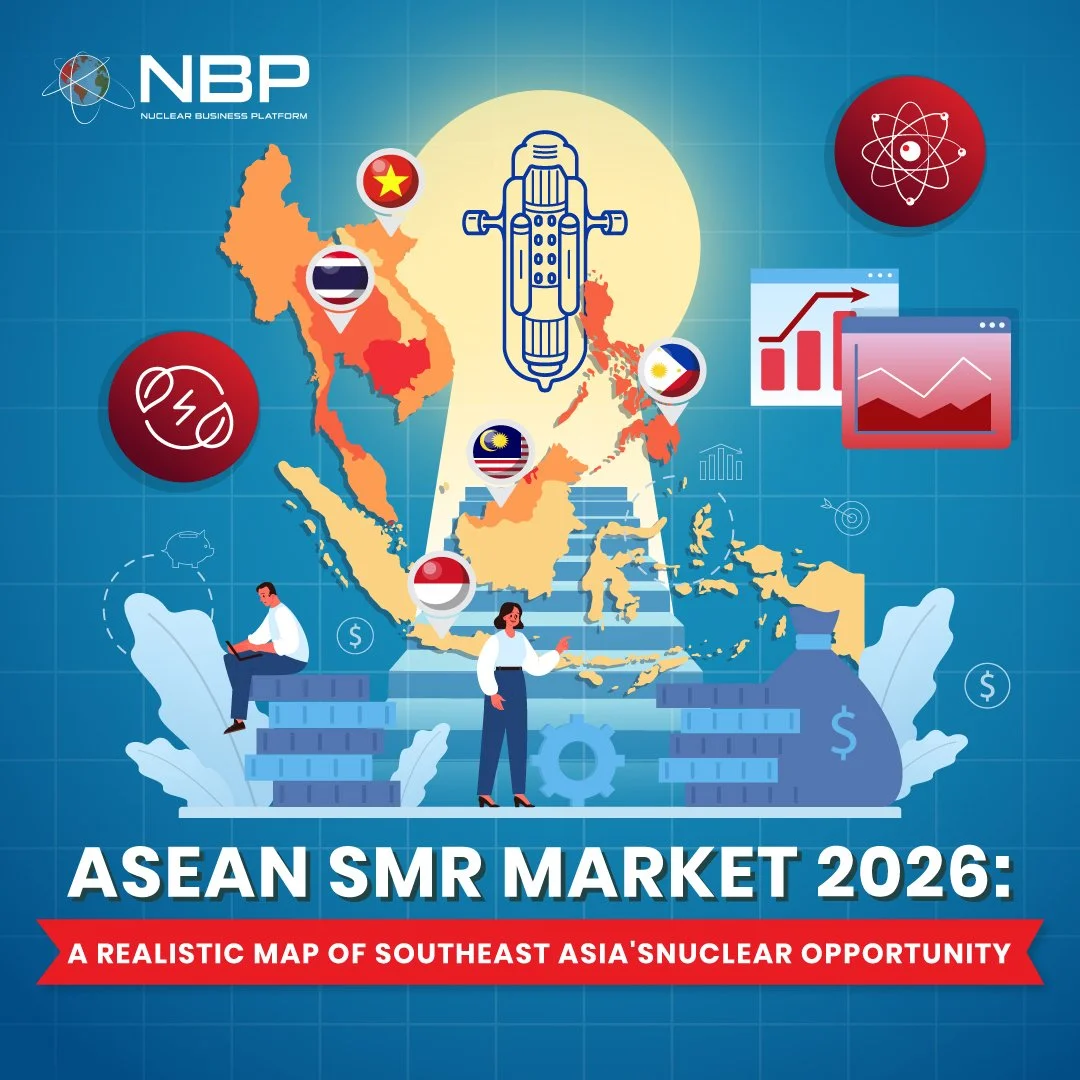
ASEAN SMR Market 2026: A Realistic Map of Southeast Asia's Nuclear Opportunity
ASEAN's SMR market is four distinct procurement environments, not one. The Philippines is the most advanced Western-aligned market with US and Korean vendors already structured. Indonesia is an industrial-demand entry point with the region's first Generation IV regulatory approval. Vietnam's revised PDP8 offers one of the last open vendor-selection windows at 4,000–6,400 MW. Malaysia and Thailand are at feasibility stage — commercially meaningful now for firms building relationships ahead of procurement. Reading the region as a bloc is how vendors get it wrong.
Five Core Lessons ASEAN Teaches Every Country Planning an SMR Programme
ASEAN's six nuclear markets are moving at different speeds, with different grids, vendors, and financing frameworks. The five lessons they collectively teach: regulatory readiness precedes deployment, technology and financing are inseparable, grid architecture determines viability, supply chain gaps are programme risks, and early engagement shapes outcomes. From Vietnam's open procurement window to the Philippines' established US-Korea positions, the region's SMR race is already underway — and those who engage early will shape it.
SMRs in Thailand by 2037: Building the Backbone of Industrial Expansion
Thailand's PDP 2024 targets 600 MW of SMRs by 2037. With KHNP and US 123 agreements in place and EGAT leading development, Thailand's third nuclear attempt is its most credible. ANBP 2026 brings together vendors and investors to shape Southeast Asia's nuclear market.
Vietnam's Nuclear Restart: Eight Years Later, a Harder Road Back
Vietnam's $22B nuclear restart faces a harder road than headlines suggest. Eight years of suspension eroded technical capacity, regulatory frameworks and vendor ties. With Ninh Thuan 1 tied to Russia and a 2031 target, the real race is rebuilding institutional capability — and winning Ninh Thuan 2. A complex but high-stakes market.
The Smartest Nuclear Programme in ASEAN Hasn’t Built Anything Yet
Singapore hasn't committed to nuclear yet — but its $150M capability-building programme, multi-partner MoUs and rigorous independent analysis set the regional standard. For ASEAN nations rushing to procurement, Singapore's capability-before-commitment model is the benchmark that attracts capital, credible vendors and bankable project frameworks.
Malaysia's SMR Opportunity: Why the Window Is Open and Won't Stay That Way
Malaysia is not just considering nuclear power — it has already laid the groundwork. With a 1.2 GW SMR target by 2035 and over a decade of institutional preparation, the question is no longer if Malaysia will pursue nuclear, but who will be part of it when it does.
Indonesia's 44 GW Nuclear Plan: What the Market Needs to Know
Indonesia is redefining its energy landscape by prioritizing Small Modular Reactors (SMRs) to serve its unique archipelagic geography. With a formal target of 44 GW by 2060—including a dedicated 9 GW for hydrogen production—the government is moving from policy aspiration to statutory planning.
Southeast Asia’s Data Centre Expansion and the Emerging Role of Nuclear Power
The intersection of Southeast Asia’s booming data centre market and its emerging nuclear energy pipeline is reshaping regional investment strategies. As AI infrastructure demand is projected to more than double to $30.47 billion by 2030, the region’s energy systems are pivoting to nuclear to provide the reliable, carbon-free baseload power that renewables alone cannot consistently deliver.
Vietnam’s Nuclear Comeback: A $22 Billion Strategic Energy Pivot
Vietnam is accelerating its transition from nuclear hesitation to a structured procurement cycle, marked by the reactivation of its $22 billion Ninh Thuan program. Driven by an 8% GDP growth target and a commitment to Net Zero by 2050, the government is repositioning nuclear energy as a critical baseload partner to intermittent renewables.
2025 Highlights from the Asian Nuclear Market
massive state-driven reactor approvals and 🇮🇳 India launching a dedicated Small Modular Reactor (SMR) mission, the region is rapidly de-risking the nuclear business model. Strategic policy shifts in 🇯🇵 Japan and new regulatory frameworks in 🇻🇳 Vietnam and 🇵🇭 the Philippines are creating a competitive frontier for global technology vendors and financial institutions.
Asia’s Nuclear Energy Rise: How Financing, Private Capital, and SMRs Are Transforming the Region’s Energy Future
Asia's nuclear acceleration is now a bankable reality! The Asian Development Bank's formal authorization of nuclear investment, coupled with the rise of SMRs, transforms the sector from high-risk to bankable infrastructure. This pivot is critical for Asia's industrial resilience and energy security.