
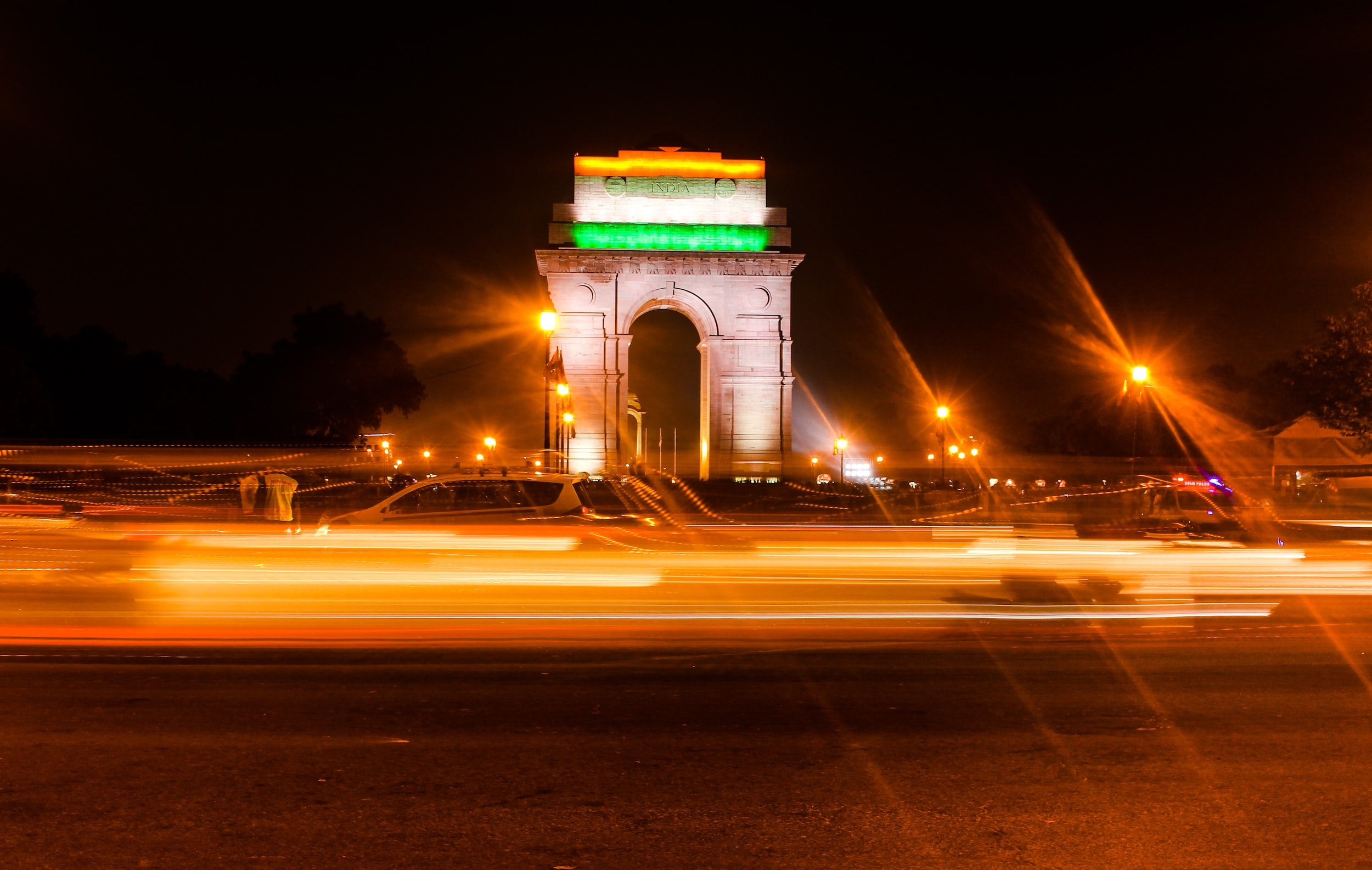
India Wants More Nuclear
Installed nuclear power capacity to increase by 200% by 2031
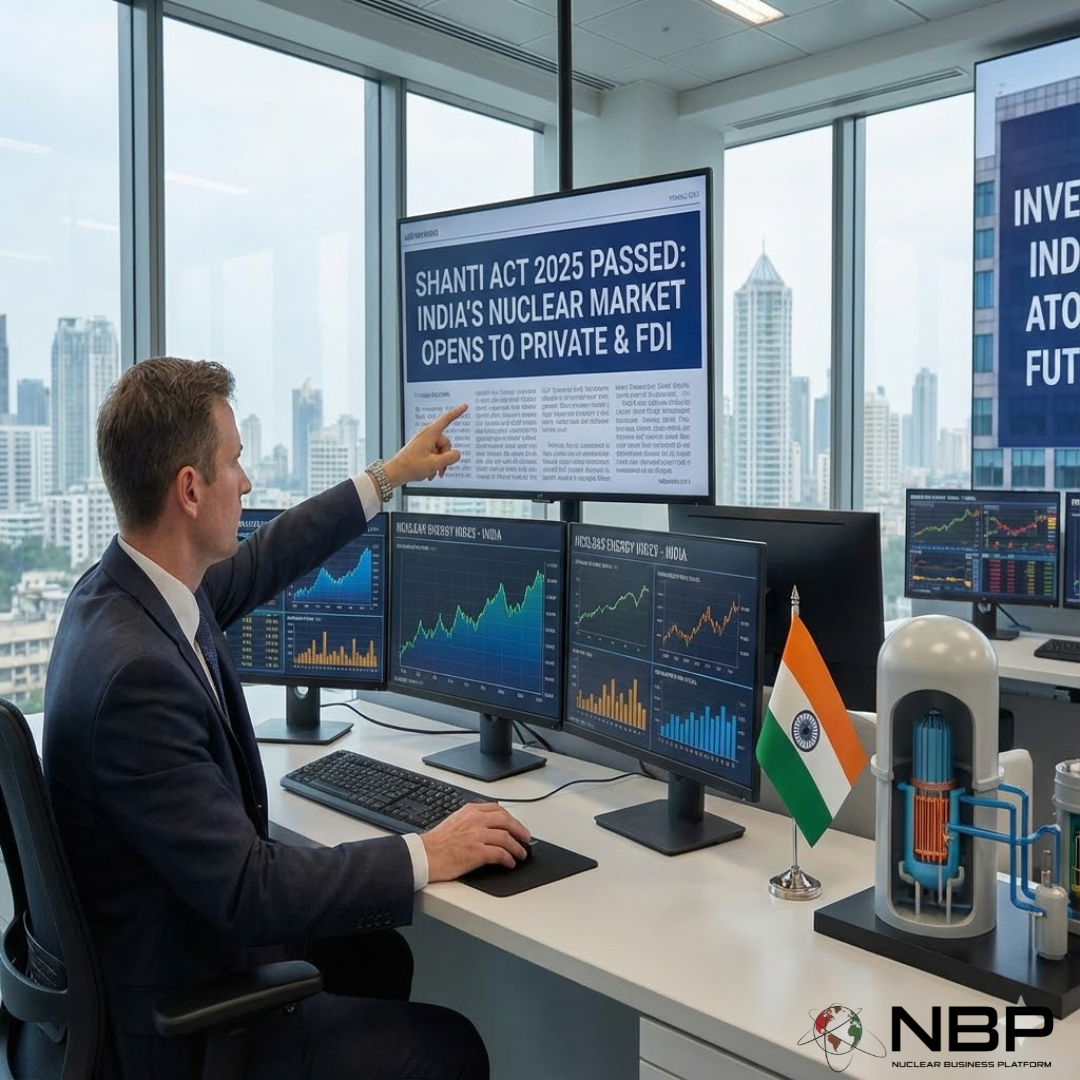
India's nuclear sector has just undergone its most consequential transformation in six decades. The passage of the SHANTI Act in December 2025 dismantled the state monopoly, capped operator liability in line with global standards, and opened the door to private and foreign equity of up to 49% in nuclear projects. For the first time, international stakeholders can engage India's nuclear market on commercially viable terms.
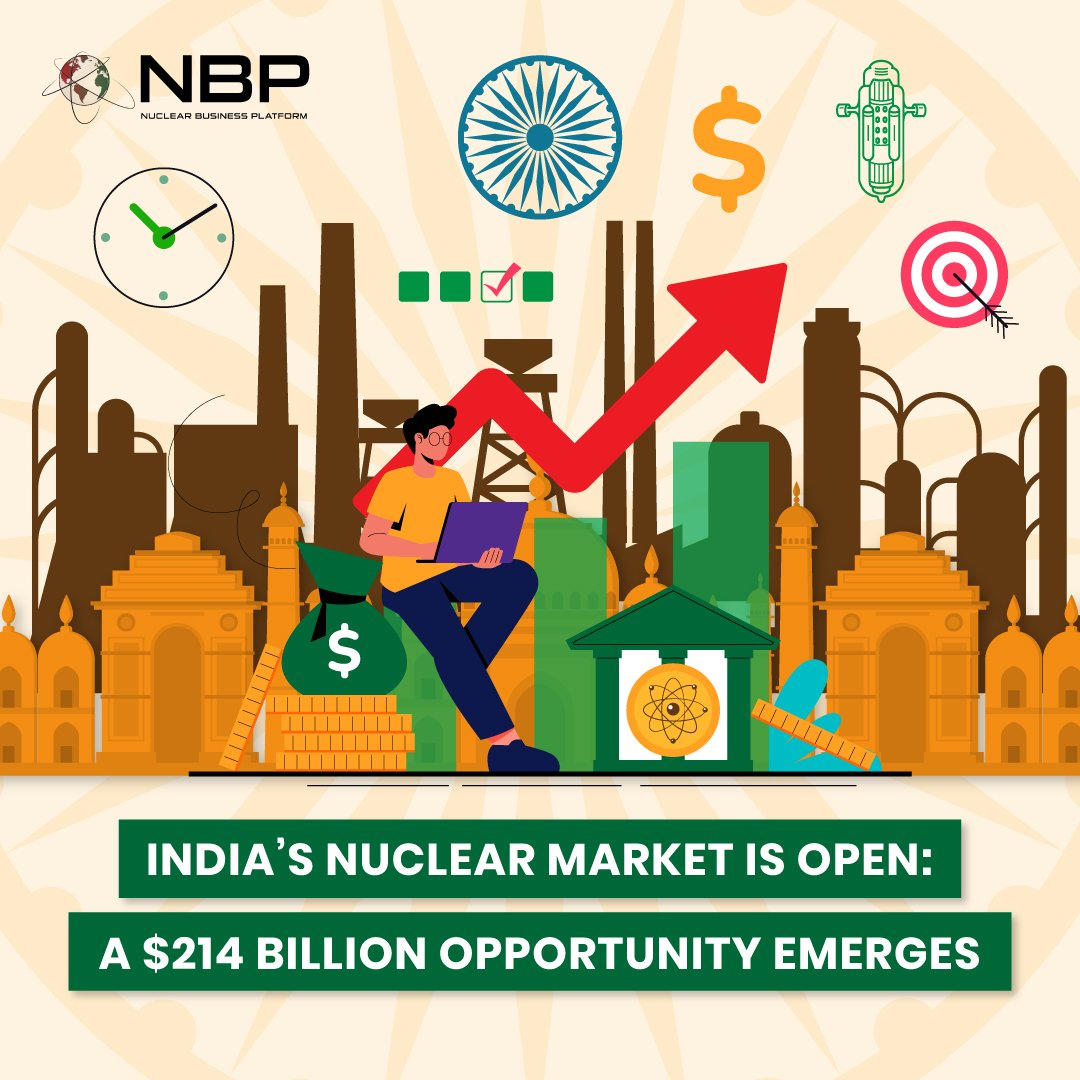
The destination is clear: 100 GW of nuclear capacity by 2047, tripling installed capacity to 22,480 MW by 2031–32 as the immediate milestone. The total investment required exceeds USD 214 billion — and the architecture to deploy it is now in place.
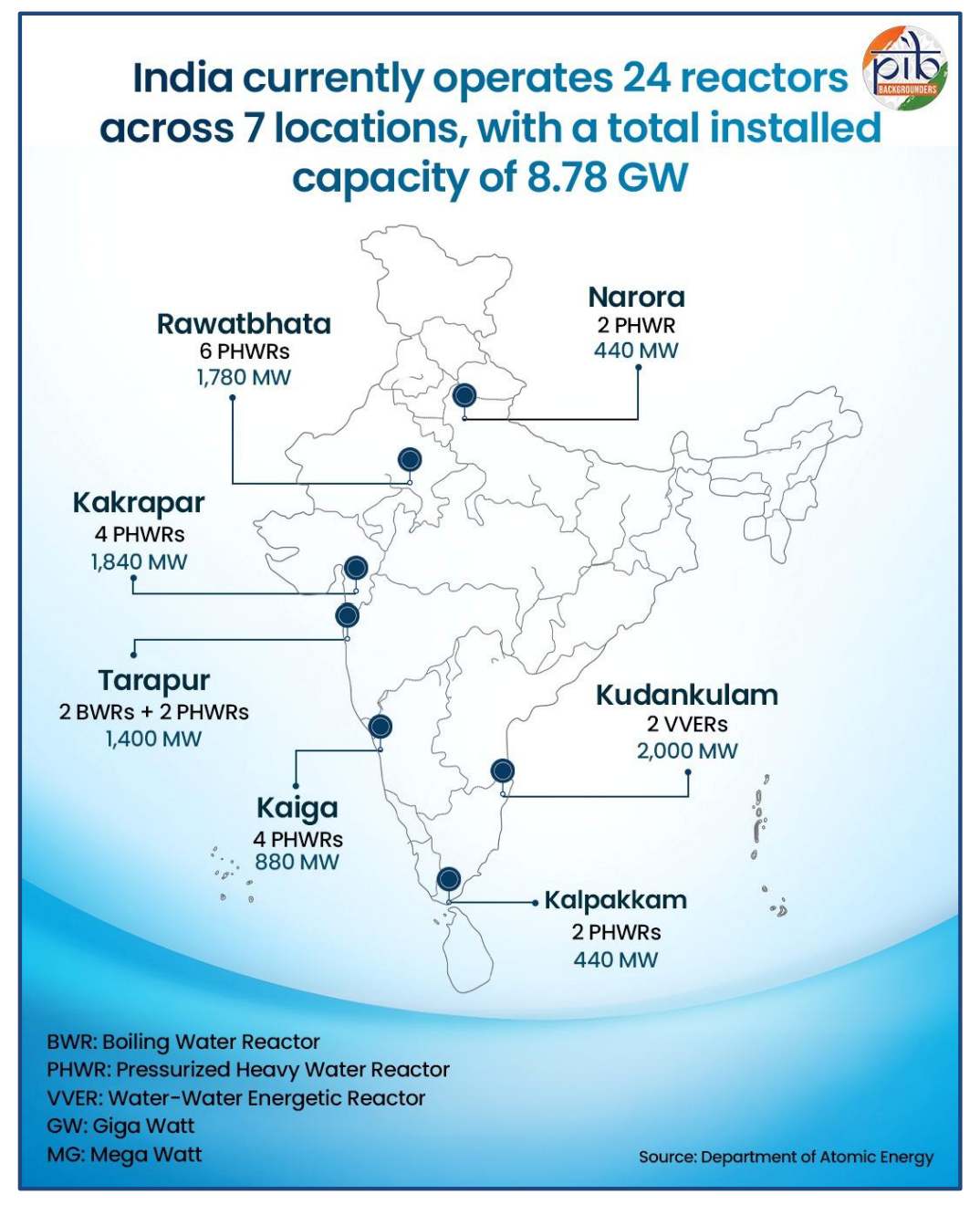
India offers business opportunities across the entire nuclear plant lifecycle
As India's economy accelerates toward its $35 trillion vision, energy demand is surging — and nuclear has moved to the top of the national agenda as the only viable zero-carbon baseload alternative to coal. The numbers tell the story: 8.78 GW of installed capacity today, over 13.6 GW in construction and pre-project stages, and a 100 GW target by 2047 that demands sustained investment on a scale India has never before attempted.
The SHANTI Act has fundamentally rewritten the rules of engagement. Private Indian conglomerates — including industrial giants in steel, aluminium, and data centres — are now authorised to fund, build, and operate nuclear assets as a new "User" category. The $26 billion Bharat Small Reactor (BSR) programme, backed by an initial government outlay of $2.4 billion, is creating a plug-and-play market for international component manufacturers, digital system integrators, and advanced technology providers.
Beyond SMRs, strategic openings span the full value chain: precision manufacturing of reactor internals, specialised sensors, advanced cooling systems, hydrogen co-generation, nuclear fuel supply, and lifecycle services. The Union Budget 2026–27 has further removed customs duties on critical nuclear imports until 2035, directly lowering the cost of market entry for international suppliers.
India is not just the world's fastest-growing major economy — it is now the world's most consequential newly opened nuclear market. For international firms, the question is no longer whether to engage, but how quickly.
India NBP 2027
22-23 June 2027
Mumbai, India
Hosted by Nuclear Business Platform
Now in its 7th edition, the India Nuclear Business Platform (INBP 2026) takes place on 16–17 June 2026 in Mumbai — the first major international nuclear gathering since the SHANTI Act became law. Supported by Industry Partners Adani Group and Technical Partners Tata Power, INBP 2026 moves past policy debate to focus on commercial execution: how international vendors, investors, and EPC firms can access India's newly liberalised nuclear market and forge the partnerships that will define the next decade of Indian nuclear development.
India Nuclear Business Platform 2026 Highlights
Over two days, senior leaders from NPCIL, NTPC, Tata Power, Adani, Reliance, JSW, BARC, EY-Parthenon, WTW, and international technology and supply chain companies debated the opportunities, challenges, and roadmap for India's journey to 100 GW of nuclear capacity by 2047.
India Nuclear Industry Report
The most consequential year in India's nuclear history demands a new reference document. The 2026 edition of this 87-page report covers the transformed post-SHANTI Act landscape in full — written for international companies that need to act now, not monitor from a distance.
Key topics covered in this report include:
The SHANTI Act, 2025: what changed, what it means commercially, and what remains unresolved
PFBR first criticality (6 April 2026): India enters Stage 2 of its three-stage programme
India's 100 GW nuclear target: the pipeline, the investment, the timeline
The BSR programme: six industrial giants, 16 sites, and the entry point for international suppliers
The nuclear delivery ecosystem: NTPC, EIL, JVs, and the new project vehicles
Fuel, regulation, and safety readiness for the next phase
International partnerships: Westinghouse, EDF, Rosatom and what the SHANTI Act unlocks
Financing, liability, and insurance — the hidden constraint on scale-up
India's advanced nuclear pathway: fast breeders, thorium, and next-generation reactors
Fill in the form below to receive a sample copy of the report.
India's Nuclear 100 — Financing, Market Entry and the Post-SHANTI Opportunity
This webinar co-hosted with EY Pathenon covered the strategic context post-SHANTI, the financing landscape and capital structures emerging in the new framework, and the market entry pathways now open to international players, ahead of the 7th India Nuclear Business Platform in Mumbai on 16–17 June 2026.
Market Insights



Video Interviews



IEEE Standards Association is playing an unique role in advancing the global nuclear industry through collaborations and certifications. Zaf Coelho had a chat with Patrick Murray on the state of IEEE Nuclear Standards and Certification Programs and how they can help both established and up and coming nuclear regulators, utilities, design integrators, laboratories, and manufacturers.
IEEE Standards Association is playing an unique role in advancing the global nuclear industry through collaborations and certifications. Zaf Coelho had a chat with Patrick Murray on the state of IEEE Nuclear Standards and Certification Programs and how they can help both established and up and coming nuclear regulators, utilities, design integrators, laboratories, and manufacturers.