Barakah Is Complete. The UAE's Nuclear Ambitions Are Just Beginning
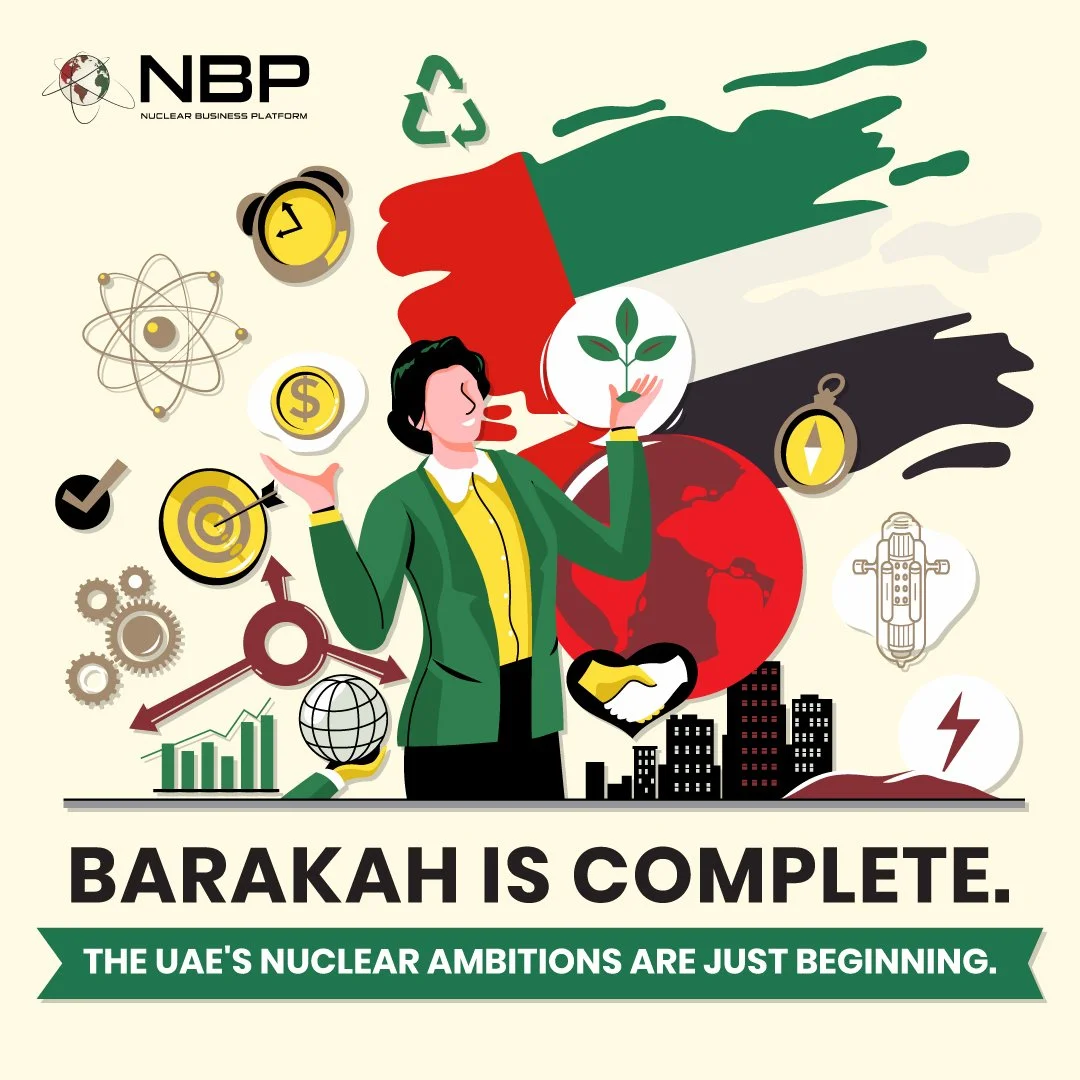
In September 2024, the UAE completed the commissioning of Barakah's fourth unit. All four APR-1400 units are now fully operational, producing 5.6 GW of electricity and supplying around 25% of the country's power needs. The project was delivered by a country with no prior nuclear construction experience, on time and to international safety standards. By any measure, it is a remarkable achievement.
But Barakah's completion is not the end of the UAE's nuclear story. It is the point where the next, more complex phase begins. The decisions the UAE makes from here will determine what kind of player it becomes in the global nuclear industry over the next 30 years. Those decisions are now being made, and international firms that understand what is at stake will find this market considerably more interesting than a completed construction project might suggest.
The Case for Expanding the Fleet
Discussions between the Emirates Nuclear Energy Company (ENEC), Korea Electric Power Corporation (KEPCO), and Korea Hydro & Nuclear Power (KHNP) on additional reactor units at the Barakah site are underway. The UAE's Energy Strategy 2050 includes a 6% nuclear target in the national energy mix, a figure the current four units already approach. But the country's industrial ambitions, particularly in aluminium, steel, and petrochemicals, will require more firm, low-carbon power than Barakah currently provides. Adding units to the existing site is far less complicated than building a new plant from scratch. The land is prepared, the regulatory approvals are in place, the grid connections exist, and the workforce is trained and operating. The incremental cost and risk of expanding Barakah are much lower than for any greenfield nuclear project in the region.
For Korea's KEPCO and KHNP, winning a Barakah expansion contract would be commercially significant beyond the UAE alone. A second contract at the same site strengthens their reference position across every other nuclear procurement in the Middle East. For the UAE, the expansion is as much a strategic signal as an energy decision. It tells the global industry that Barakah was not a one-off but the foundation of a long-term nuclear programme.
Investing in the Next Generation of Technology
Alongside the expansion discussion, ENEC is making moves into advanced reactor technology. In March 2024, it signed an MoU with General Atomics covering joint research into advanced reactor designs and next-generation materials, including silicon carbide fuel cladding, which improves reactor safety and reduces operational downtime. This is not the kind of agreement a utility signs when it is simply looking to keep the lights on. It is the kind of agreement an organisation signs when it wants a seat at the table in shaping where nuclear technology goes next.
Small Modular Reactors are a central part of this picture. The global SMR market is developing quickly, with several designs approaching commercial deployment this decade. The UAE is well placed to participate. It has operational nuclear experience, an internationally respected regulatory body in the Federal Authority for Nuclear Regulation (FANR), existing industrial capacity with nuclear-grade quality systems, and the financial resources to take long-term technology positions. Countries that establish early partnerships in the SMR space will be better positioned when procurement cycles open. The UAE understands this, and its current technology partnerships reflect that understanding.


Capital as a Strategic Tool
One dimension of the UAE's nuclear position that rarely gets enough attention is capital. Abu Dhabi's sovereign wealth institutions manage some of the largest long-term investment portfolios in the world. Nuclear energy, with its 60-year operational timelines and predictable revenue once running, is structurally well suited to that kind of patient capital.
The UAE is not simply an electricity consumer that happens to operate nuclear plants. It is a capital-rich state with a proven track record in nuclear programme delivery, a credible regulatory framework, and growing domestic industrial capability. That combination makes it a potential nuclear investor across the wider region, not just a nuclear operator at home. The Barakah project alone generated over $6.7 billion in local procurement during the construction phase. Nuclear programmes of this scale create substantial commercial activity well beyond the reactor itself, and the UAE has firsthand experience managing that ecosystem.
What This Means for International Firms
The first phase of Barakah created a clear and defined set of commercial opportunities: construction contracts, component supply, engineering services, and operational support within a KEPCO-led programme structure. The next phase is more open and more varied.
The fleet expansion, when it moves forward, will create procurement activity in which Korea has a strong position but where specific technology segments remain open to competition. Digital systems, instrumentation and control, advanced materials, and specialised engineering services are all areas where firms outside the Korean-led consortium can contribute meaningfully. The advanced reactor and SMR investment track creates openings for technology developers who can offer credible partnerships to a counterpart that has both capital and operational experience. The sovereign investment dimension creates a role for financial advisory and project structuring firms that can help connect Gulf capital with nuclear project opportunities across the region.
These dynamics are increasingly reinforced through industry platforms such as NBP's Asia Nuclear Business Platform (ANBP) 2026 (3–5 November, Hanoi), where policymakers, investors, and vendors refine financing and partnership models while building the relationships that ultimately shape market access.
The UAE nuclear market in 2026 is not a market still finding its feet. It is a mature programme deciding what it wants to become next. Firms that were part of Barakah's first phase need to understand how the priorities are shifting. Firms that were not part of it have a genuine entry point now, provided they engage with a clear and accurate picture of what the UAE is building toward, rather than what it has already built.