
NBP periodically publishes short articles on nuclear energy matters which either have a geographic or topical focus. Feel free to browse through all our articles and if you would like to read on something specific, please use the search function. For example, you can search for articles relating to Africa or India or financing or SMR etc. You can also use the filter function to see articles pertaining to Asia, Africa, India or Türkiye.
Make in India Meets Nuclear Power: Opportunities for Suppliers and Manufacturers
India's 100 GW by 2047 nuclear target is a manufacturing story as much as an energy one. Fleet-mode PHWRs, 46 GW open to private and joint-venture players, 49% FDI under the SHANTI Act and factory-built SMRs create supplier orders now. Foreign vendors need Indian manufacturing partners, and the draft rules are still open for consultation.
Why South Africa Is the Anchor Point for Africa's Nuclear Buildout
South Africa is Africa's only operating commercial nuclear power producer, with four decades of experience at Koeberg, a regulator running since 1999, and a continental isotope and grid role. That makes it the natural anchor point for Africa's nuclear buildout.
Technology Sovereignty & Technology Import: Understanding India's Dual-Track Nuclear Market
India's nuclear programme runs on two complementary tracks: an indigenous thorium-based three-stage programme anchored by the PFBR, and an import track evaluating France's EPR and Russia's VVER-1200. Both serve the 100 GW by 2047 target under the new SHANTI Act, which permits 49% FDI and private participation from Tata Power, Adani, and others.
Construction Site to Operating Nation: What Akkuyu's Commissioning Changes for Türkiye's Nuclear Market
Türkiye's Akkuyu Unit 1 is entering pre-commissioning, a threshold moment that shifts the country from a construction market to an operating nuclear nation. With USD 65.59 billion spent on energy imports in 2024 and fossil fuels at 55% of generation, the plant's 4,800 MW combined capacity reshapes Türkiye's energy balance, regulatory credibility, and workforce pipeline for Sinop, Thrace, and its 5,000 MWe SMR programme.
Why Global Nuclear Powers Are Targeting Türkiye
— all targeting Türkiye's 20,000 MW nuclear pipeline. Akkuyu (Rosatom BOO, commissioning), Sinop (US-Korea trilateral, Gen III+, first Western contract), Thrace (SPIC/CAP1400, first Chinese-tech European-adjacent reference), 5,000 MW SMR programme. 400+ companies with Akkuyu supply credentials. Geographic hub for ME/Africa/Balkans.
Why the Next Five Years Matter for India's SMR Market
India's SMR market crossed a threshold in July 2026: 5 indigenous SMRs by 2033 ($2.11B committed) + Tata Power targeting 2032–33 commissioning (construction 2028, sites in MP/Odisha/Gujarat). Three tracks: BSMR-200 (220 MWe), SMR-55 (55 MWe), HTGR (5 MWt, hydrogen). No binding vendor deals yet. NTPC talking to EDF, Rosatom, Westinghouse, KHNP, Holtec. The window is open.
Why Sinop Is More Than Just Türkiye's Second Nuclear Power Plant
Sinop (4,800 MW, US-South Korea trilateral, Gen III+) is Türkiye's first fully open Western-aligned nuclear procurement. Unlike Akkuyu's Rosatom ecosystem, Sinop unlocks US EXIM, KEXIM, and European ECA financing. Akkuyu's data reveals the key gap: 85% foreign electrical equipment supply — the priority localisation target. Positions are built before the tender.
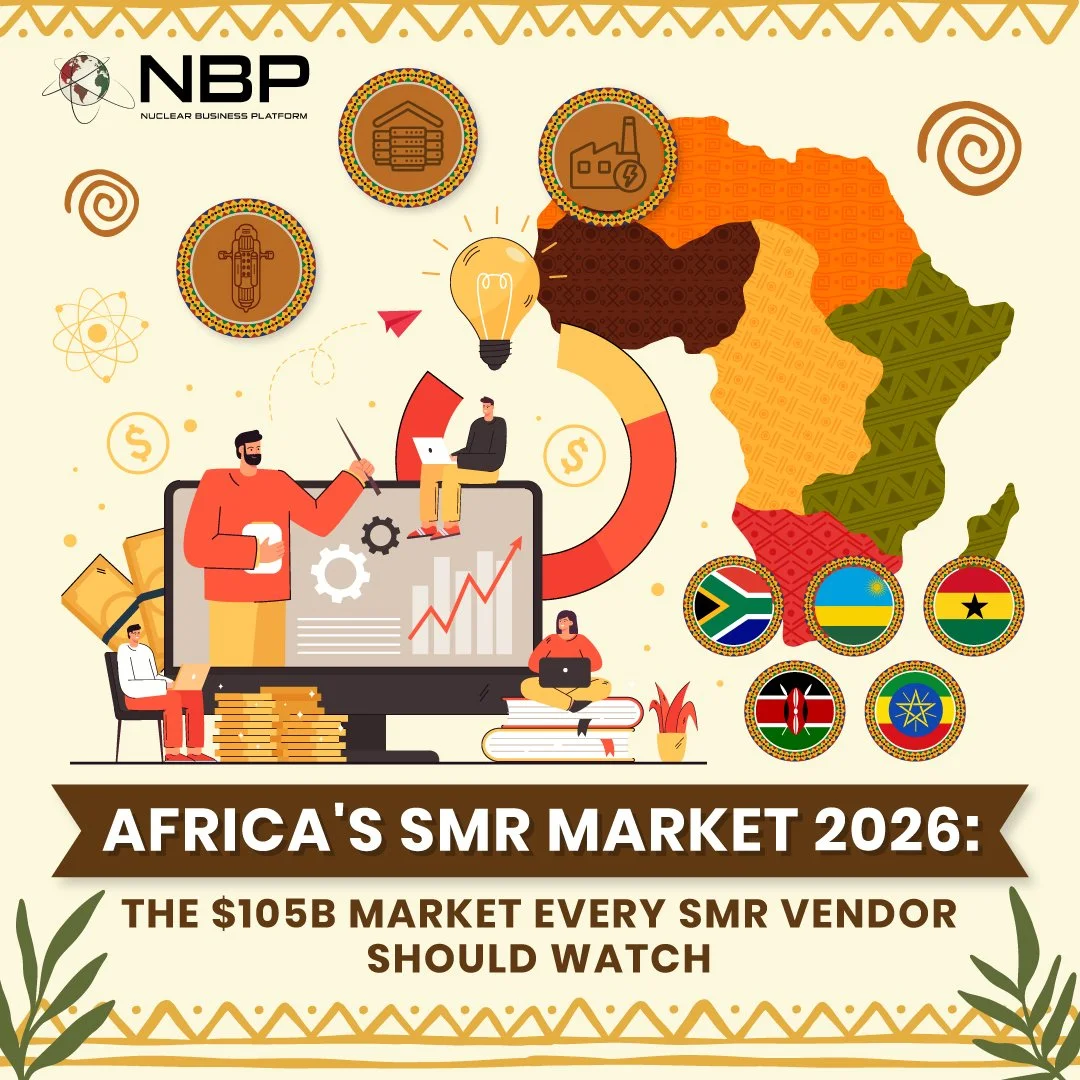
Africa's SMR Market 2026: The $105B Market Every SMR Vendor Should Watch
Africa's SMR pipeline is live: $105B total, 29% global SMR CAGR to $53.8B by 2036. South Africa IRP 2025 (5,200 MW by 2039, Necsa SMR EoI March 2026). Rwanda (Holtec + Rosatom May 2026 + Dual Fluid). Ghana (NuScale, 1 GW by 2034). Kenya (Rolls-Royce bid, KAERI reactor). World Bank ban lifted June 2025. Vendors without financing mapped are already behind. NBP's AFNBP is the platform.
Russia. America. China. Why They're All Building Nuclear in Türkiye.
Türkiye is running 4 nuclear tracks simultaneously: Akkuyu (4,800 MW BOO, world's first), Sinop (4,800 MW Gen III+), Thrace (5,600 MW SPIC/CAP1400), and a 5,000 MW SMR programme ( all in contention). Multi-bloc strategy = leverage + open supply chains. 73%+ EPC localisation at Akkuyu.
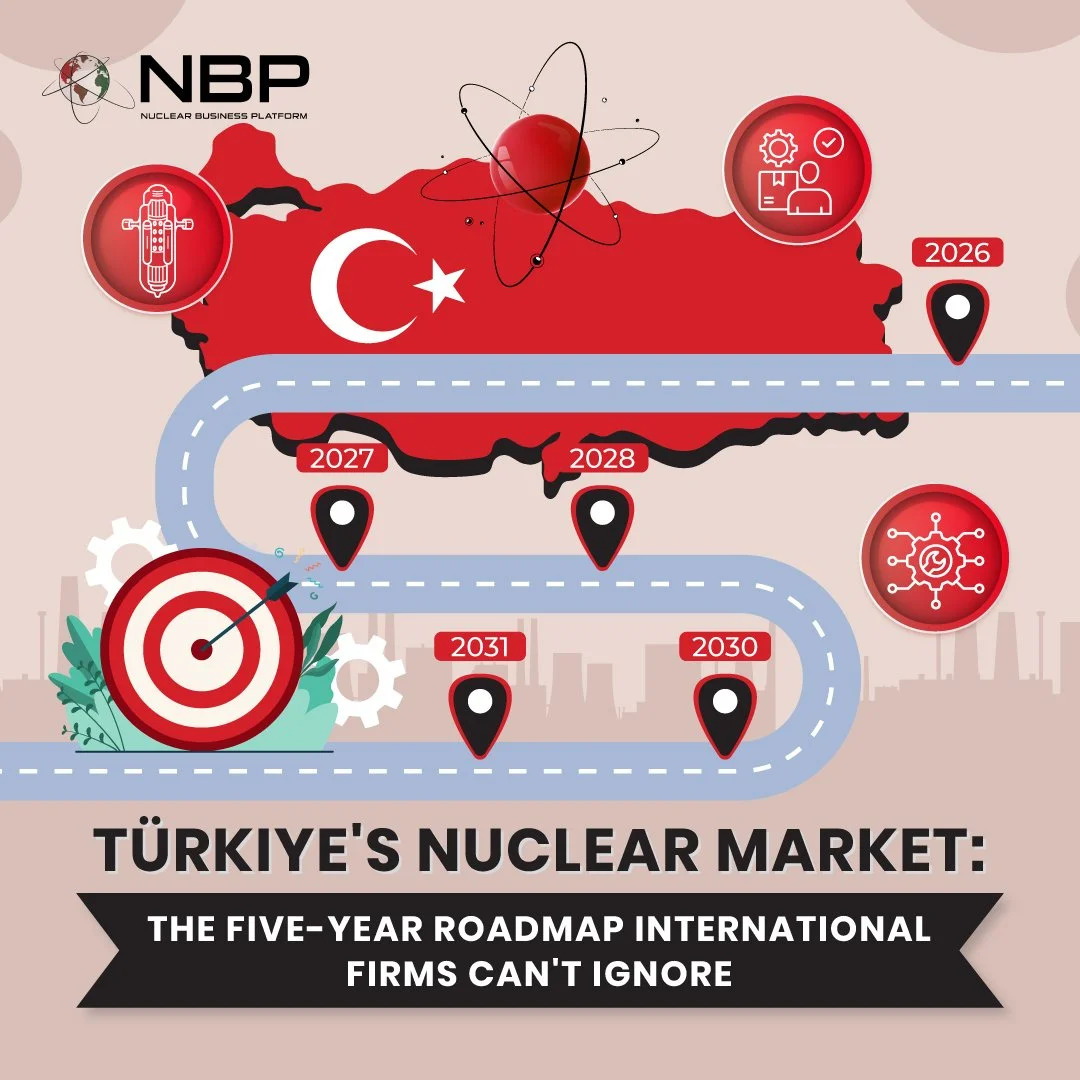
Türkiye's Nuclear Market: The Five-Year Roadmap International Firms Can't Ignore
Türkiye's 2026–2031 nuclear roadmap has 4 converging streams: Akkuyu full operation (2026–2028) creating sustained service demand; Sinop vendor selection (AP1000/APR-1400, first Western contract); SMR procurement opening (5,000 MW target, technopark, Rolls-Royce/Canada/France/US in talks); and Thrace construction decision (5,600 MW, SPIC/CAP1400).
India's 100 GW Nuclear Target Has a Supply Chain Gap. That Gap Is the Opportunity.
India's nuclear equipment market grows from USD 1.54B (2024) to USD 2.31B by 2033 — before SHANTI Act acceleration. With BHEL, L&T, Godrej and Walchandnagar as anchor suppliers, the supply chain exists but lacks scale. Entry terms: technology transfer + localisation = a 25-year relationship in a USD 214B programme.
Five Business Lessons the Indian Nuclear Industry Is Teaching the World
India's nuclear opening is teaching the world 5 business lessons: closed markets are compressed springs; state supply chains are JV assets; tech diversity is leverage; liability reform unlocks capital; and progressive indigenisation builds the longest-duration commercial relationships in the sector.
Africa's $105 Billion Nuclear Pipeline Has Five Different Financing Problems. Here Is How to Solve Each One.
Africa's $105B nuclear pipeline faces 5 distinct financing problems — from sovereign creditworthiness to regional coordination gaps. The World Bank lifted its nuclear ban in June 2025, opening new pathways.
Additive Manufacturing in India's Nuclear Sector: The Business Case for Entry Now
India: 8.78 GW → 100 GW nuclear by 2047. AM cuts lead times from 24 months to weeks & waste by 90%. BARC, IGCAR, L&T, Wipro 3D & Midhani are ready. SHANTI Act opens the market. Entry window is now.
Additive Manufacturing in Türkiye's Nuclear Sector: Business Opportunities from Akkuyu to SMRs
Additive manufacturing is set to transform Türkiye's nuclear supply chain — cutting lead times from 24 months to weeks, eliminating up to 95% material waste, and enabling complex single-piece components with no weld joints. With Akkuyu operational, Sinop and Thrace in planning, and a 5 GW SMR target underway, the demand pipeline is multi-decade. TAI, Ermaksan, TEI, EKTAM, and TENMAK form an ecosystem ready for international partnership. The market rewards early, qualification-led engagement over reactive bidding.
Five Lessons Türkiye Is Teaching the World About Building a Nuclear Export Future
Türkiye is building a nuclear export future — one strategic decision at a time. From the Akkuyu BOO deal to Sinop and Thrace, from TENMAK's R&D infrastructure to international quality qualifications, and from geographic positioning across the Middle East, Africa, and the Balkans — Türkiye's five-lesson playbook shows how a buyer becomes an exporter. A landmark industrial transformation underway.
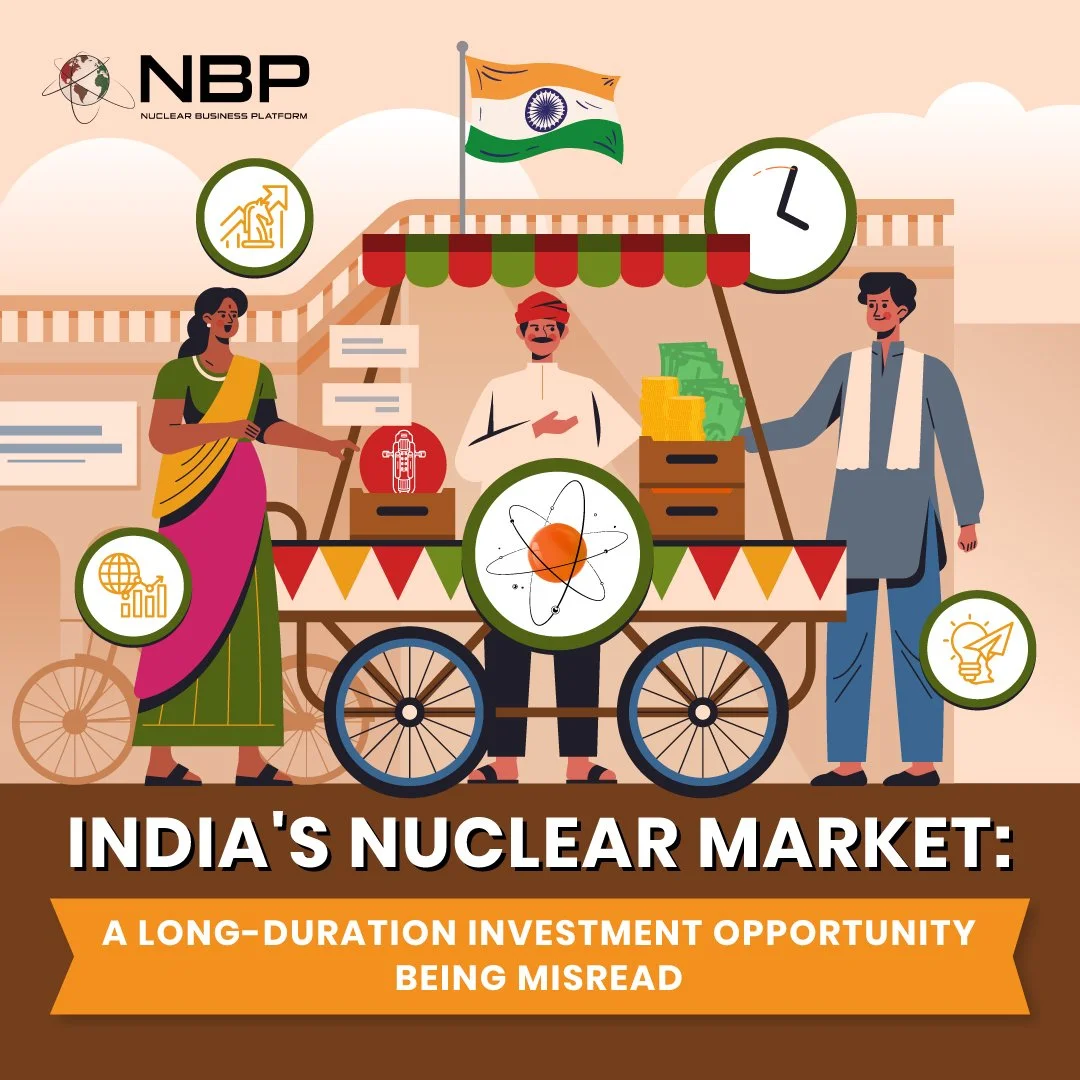
India's Nuclear Market: A Long-Duration Investment Opportunity Being Misread
India's nuclear sector is opening to private capital after the SHANTI Act 2025. With 8.88 GW today and a 100 GW target by 2047, the USD 214 billion opportunity is attracting Adani, Tata, Westinghouse and EDF.
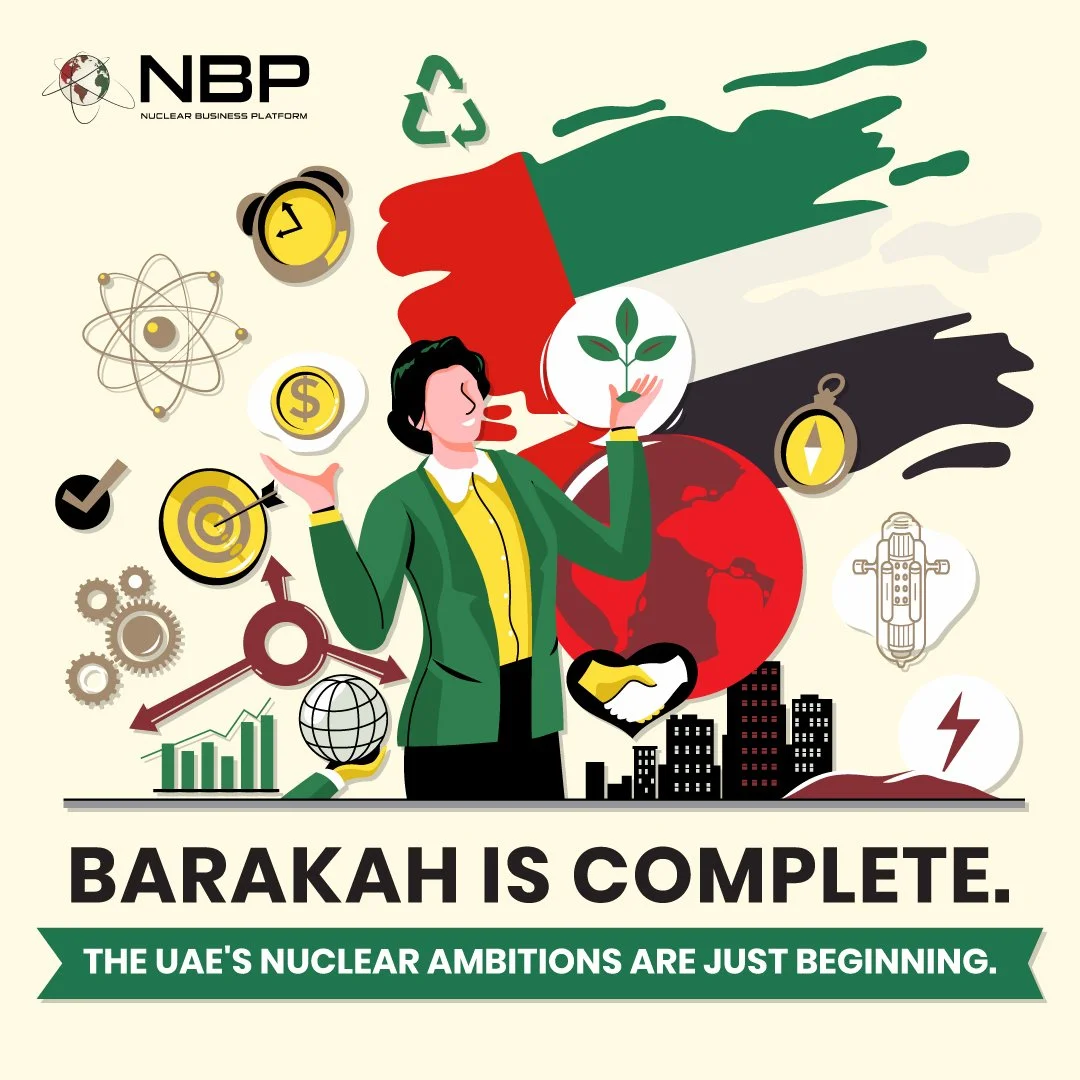
Barakah Is Complete. The UAE's Nuclear Ambitions Are Just Beginning
With all 4 Barakah units now online at 5.6 GW, the UAE shifts focus to fleet expansion, SMR investment and sovereign capital deployment across the region. ENEC's MoU with General Atomics and KEPCO talks signal a mature programme entering its next strategic phase — creating new entry points for global vendors.
Türkiye's Nuclear Robotics Market – A Multi-Decade Investment Opportunity
Türkiye's 15+ GW nuclear pipeline — Akkuyu, Sinop, Thrace and 5 GW SMR target — is creating multi-decade demand for nuclear robotics. The global market grows to USD 7.5bn by 2035. TNBP 2026 in Ankara (26–27 Aug) connects vendors with Türkiye's nuclear programme.
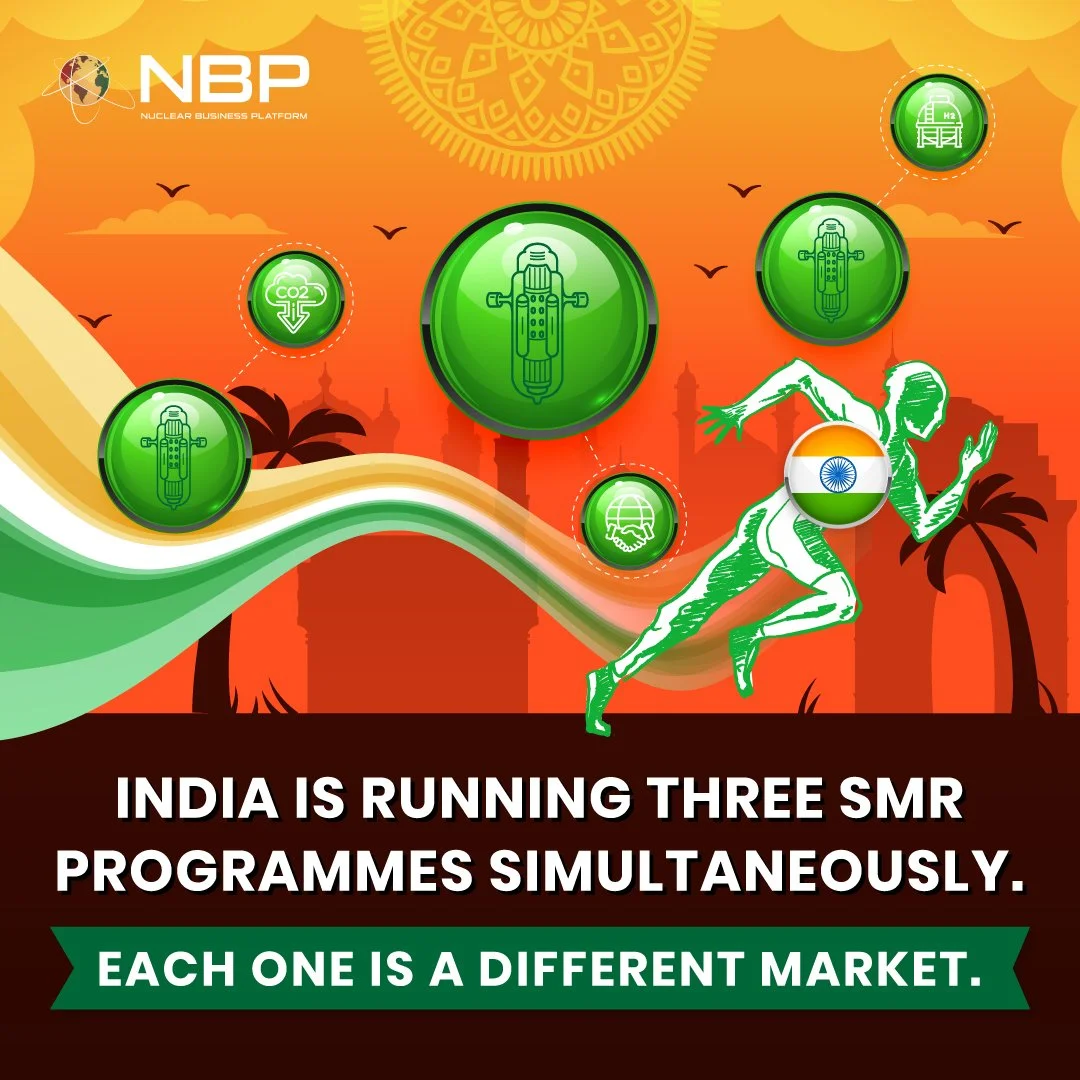
India Is Running Three SMR Programmes Simultaneously. Each One Is a Different Market
India runs 3 parallel SMR tracks: BSMR-200 for industrial decarbonisation, SMR-55 for remote grids, and a hydrogen HTGR — each a distinct commercial opportunity. With SHANTI Act reforms, $2.5B committed, Adani eyeing 1.6 GW, and INBP 2026 in June, the market is open but differentiated. Know which track you're targeting.