
Indonesia's 44 GW Nuclear Plan: What the Market Needs to Know
Indonesia is not simply a large nuclear market in the making; it is a structurally unique one. Stretching across 17,000 islands and home to 280 million people, the world's fourth most populous nation operates electricity systems that are, by geographic necessity, fragmented, distributed, and impossible to serve from a single centralised generation base. This is not a grid challenge that conventional large-scale nuclear plants are designed to solve. It is, however, precisely the challenge that Small Modular Reactors were engineered to address, and it is why Indonesia's government has prioritised SMR technology as the foundation of its nuclear programme, not as a second-best alternative to gigawatt-scale plants, but as the only technology that fits the country's physical reality.
Indonesia's National Energy Council has announced plans to commission its first nuclear power plant between 2032 and 2034, with an initial capacity of 500 MW under the 2025–2034 Electricity Supply Business Plan (RUPTL). Sumatra and Kalimantan have been identified as candidate locations, both major islands with substantial industrial bases and energy demand profiles that make them natural anchors for SMR deployment. The government's own framing is instructive: SMR is described as a perfect fit for industrial hubs and the growing blue economy across the archipelago. That framing positions nuclear not as a power sector asset alone, but as the energy infrastructure underpinning Indonesia's broader maritime and industrial economic ambition.
44 GW by 2060: The Scale Behind the Ambition
The RUPTL's 2032 milestone is the near-term entry point into a programme of considerably larger scale. Indonesia's long-term energy transition strategy targets 44 GW of nuclear capacity by 2060, a figure that is set against the country's current zero nuclear generation base, and defines one of the largest nuclear new-build pipelines of any nation currently in the planning phase. Of that 44 GW, 35 GW is designated for electricity generation and 9 GW is earmarked specifically for hydrogen production, with the hydrogen programme scheduled to begin from 2045. The hydrogen allocation is not a footnote, but it is a statement of industrial strategy, positioning nuclear as the clean energy backbone of an economy that intends to be a hydrogen producer at scale in the second half of this century.
The pathway from 500 MW in 2032 to 44 GW by 2060 is, by any measure, a determined trajectory. It is also a coherent one. Indonesia's net-zero commitment provides the policy anchor. The archipelago's structural energy access challenge provides the geographic imperative. The industrial hubs of Sumatra, Kalimantan, Java, and Sulawesi provide the demand base. And the SMR technology preference provides the deployment model that makes the programme practically executable across a geography that no other generation technology can serve with equivalent reliability, density, and flexibility. Each of these factors reinforces the others. And collectively they define a programme architecture that is structurally durable rather than aspirationally fragile.
The Hydrogen Dimension: Nuclear Beyond the Grid
The allocation of 9 GW of nuclear capacity specifically for hydrogen production from 2045 sets Indonesia apart from virtually every other nuclear newcomer nation in the current global pipeline. Most countries at Indonesia's stage of nuclear programme development are focused exclusively on electricity generation. The hydrogen dimension, where it is considered at all, is treated as a longer-term possibility rather than a quantified, capacity-allocated strategic commitment. But Indonesia's explicit 9 GW hydrogen target reflects a recognition that nuclear's value in a net-zero economy extends well beyond the power sector.
For the nuclear supply chain, the hydrogen allocation has direct implications. Electrolysis equipment, hydrogen storage and transport infrastructure, industrial process integration, and the specific siting and operational requirements of nuclear-to-hydrogen facilities all represent distinct market segments that will develop. The 2045 start date for the hydrogen programme is not distant in project development terms; the engineering, procurement, and partnership decisions that will determine its success are being shaped now.
Indonesia and the ASEAN Nuclear Moment
Indonesia's nuclear programme does not exist in regional isolation. Across Southeast Asia, interest in nuclear energy is accelerating. Malaysia, Thailand, Vietnam, and the Philippines are each at various stages of nuclear planning and engagement, with the region collectively representing a nuclear investment pipeline that Wood Mackenzie estimates at $208 billion for 25 GW of capacity by 2050. As the largest economy in ASEAN, with the largest population and the most ambitious long-term nuclear capacity target, Indonesia occupies a position of structural significance in the regional nuclear conversation, not merely as one market among several, but as the country whose programme choices, regulatory frameworks, technology selections, and financing models will influence how the broader ASEAN nuclear ecosystem develops.
The strengthening of dialogue and cooperation on nuclear energy across ASEAN, with Indonesia, Malaysia, Thailand, and Vietnam at its centre, is creating the conditions for regional supply chain development, shared regulatory capacity, and potentially pooled training infrastructure. For the global nuclear industry, the ASEAN nuclear market is not a collection of independent national programmes to be engaged sequentially. It is a regional market with interconnected dynamics, and Indonesia is its anchor.
The Programme Is Moving and the Timeline Is Defined
What distinguishes Indonesia's nuclear programme at this moment is the transition from policy aspiration to formal planning. The inclusion of nuclear in the RUPTL 2025–2034, Indonesia's statutory electricity supply business plan, is not a ministerial statement or a strategy document aspiration. It is a regulated planning instrument with defined capacity targets, technology preferences, and timeline commitments. The 500 MW first plant by 2032, the site screening of Sumatra and Kalimantan, and the SMR technology prioritisation are all embedded in the formal planning architecture of a government that has demonstrated, across the wider energy sector, the institutional capacity to execute infrastructure programmes at scale.
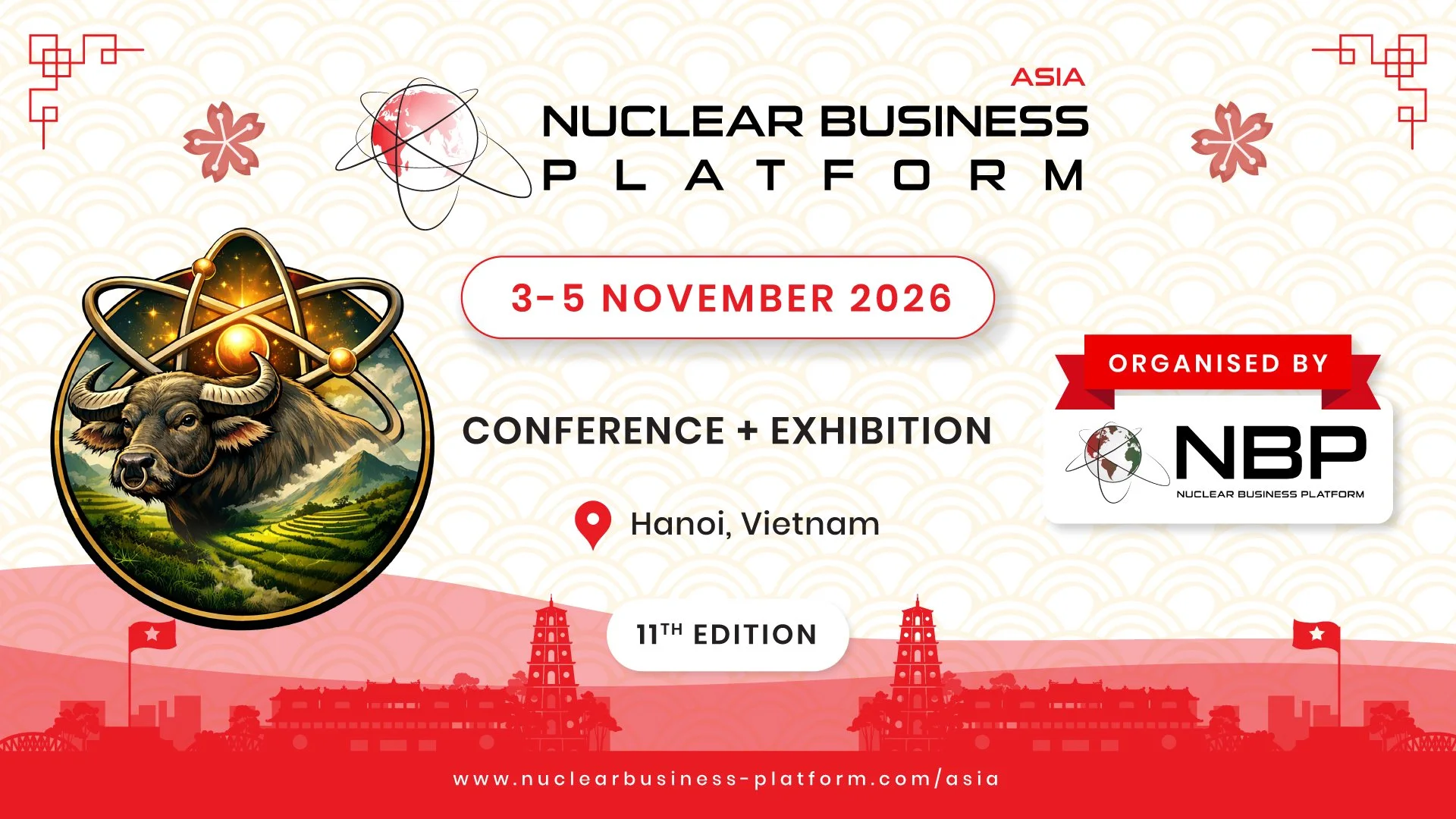
The 2032 first-plant target is seven years away. It is a timeline that, in nuclear project development terms, means the critical pre-construction phases of site finalisation, vendor selection, regulatory framework development, and financing structuring are either already underway or urgently required. Indonesia's nuclear market is not opening at some indeterminate point in the future—it is open now, at the stage where programme architecture is being defined and the partnerships that will shape the next three decades of the country's nuclear development are being formed. This trajectory will gain further clarity through platforms such as the Asia Nuclear Business Platform (ANBP) 2026, the forum’s 11th edition taking place from 3–5 November in Hanoi, Vietnam, where policymakers, investors, and vendors are expected to refine financing structures and partnership models that will shape the next phase of Indonesia’s nuclear development.