No Power, No Data: Why Nuclear Is the Backbone of Africa's Digital Future
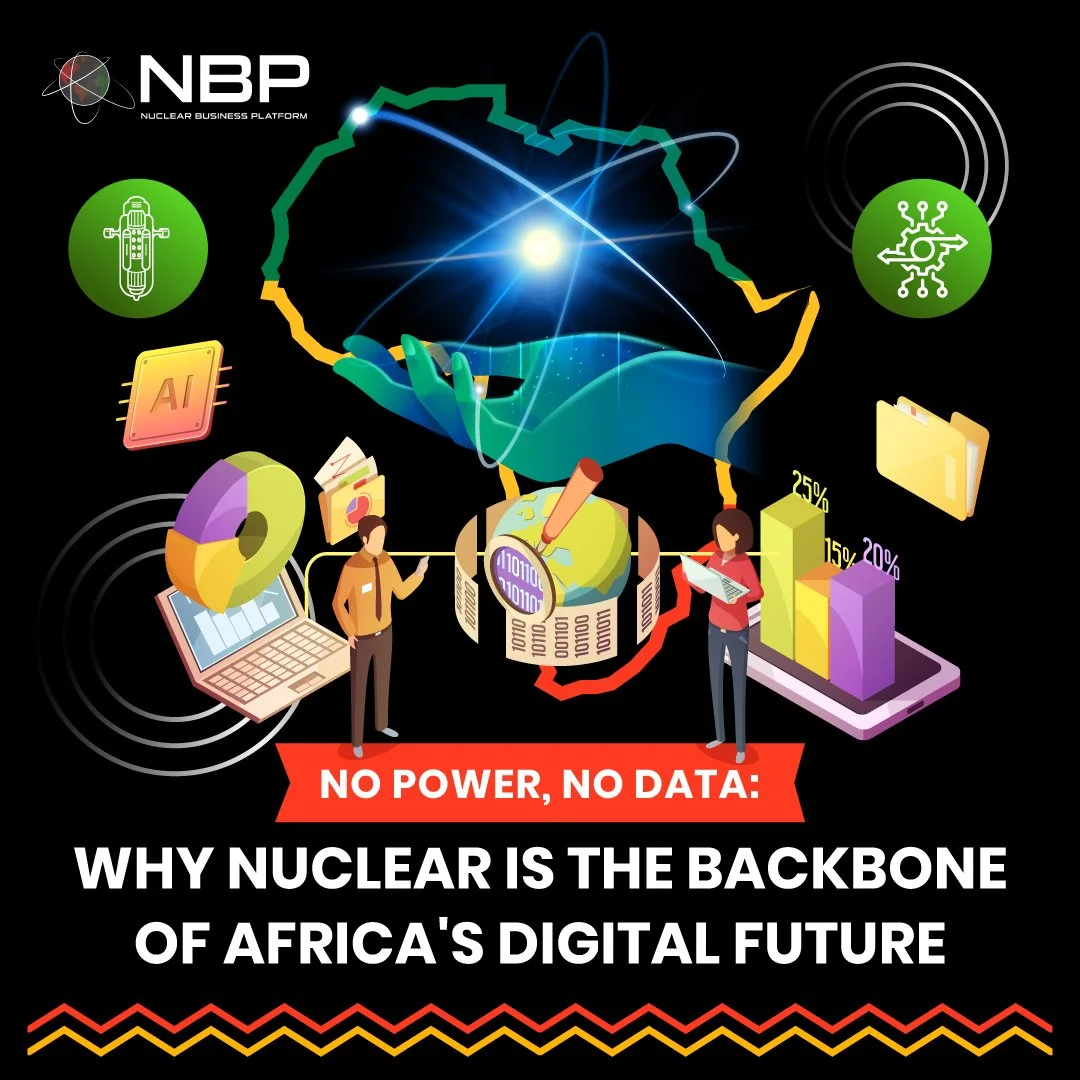
Africa's data centre market is expanding rapidly, and the energy infrastructure required to sustain that growth is becoming one of the continent's most pressing industrial challenges. Valued at USD 1.94 billion in 2025 and projected to reach USD 4.36 billion by 2031 at a CAGR of 14.46%, the sector has moved well beyond its origins as a colocation niche into a high-density, AI-driven compute economy that places extraordinary demands on power infrastructure. Africa's grids, already under significant stress, cannot meet those demands at the reliability threshold the industry requires. Nuclear energy addresses this with its unmatched capacity factor and ability to deliver firm, continuous power at scale.
Global hyperscalers are committing capital at scale across the continent: Equinix entered West Africa through a USD 320 million acquisition of MainOne, Digital Realty anchored its continental position through the acquisition of Teraco, Africa's largest single operator, and Vantage Data Centres is developing a multi-phase campus in Johannesburg. These are not speculative positions but firm commitments by operators whose business models depend on continuous, uninterrupted power. That requirement is being intensified by a structural shift within the sector itself, as data centres transition from storage and connectivity to high-density AI compute. New facilities including Teraco's JB7 in Johannesburg and IXAfrica's 22.5 MW campus in Nairobi are explicitly AI-ready, incorporating liquid cooling technologies to manage the intense thermal loads generated by AI processors. AI and machine learning applications consume up to ten times more energy than traditional cloud services, and the International Energy Agency (IEA) projects that electricity demand from AI-optimised data centres alone will more than quadruple globally by 2030. For Africa, this convergence of accelerating digital demand and constrained grid capacity creates an energy challenge of structural and lasting significance, which nuclear energy is uniquely positioned to address.
The Scale of What Is Required
The Africa Data Centres Association (ADCA) estimates that the continent needs at least 1,000 MW of new data centre capacity across approximately 700 new facilities to meet current and near-term demand. South Africa's per-capita data centre energy consumption is projected to exceed 25 kWh by 2030, which is more than fifteen times the continental average. The IEA's global forecast places total electricity demand from data centres, AI, and cryptocurrencies at between 945 and 1,000 TWh by 2030, a volume roughly equivalent to Japan's entire current electricity consumption. Africa's share of that demand is growing rapidly as the continent's AI market, projected by PwC to contribute USD 1.2 trillion to GDP by 2030, scales its underlying compute infrastructure.
The signals of committed demand are unambiguous. Microsoft has pledged USD 300 million for AI infrastructure in South Africa. The proposed USD 60 billion Africa AI Fund combines public, private, and philanthropic capital to build foundational digital infrastructure. Kenya launched its National Artificial Intelligence Strategy in March 2025. The Tier 4 data centre segment, representing the highest specification facilities with the greatest redundancy, is projected to grow at 18.02% CAGR, the fastest of any market segment. This growth rate reflects the requirements of hyperscale clients who accept nothing less than continuous, uninterrupted power. The energy infrastructure required to serve this market must meet exactly that standard.
Why Nuclear Is the Structural Answer
The energy requirements of a Tier 4, AI-optimised data centre are fundamentally incompatible with intermittent generation. Uptime requirements of 99.999%, which is the standard for hyperscale operators, cannot be met through dependence on solar or wind generation without prohibitively expensive storage and redundancy systems. Nuclear energy's average capacity factor exceeds 92.5%, and it operates continuously regardless of weather, season, or time of day. Natural gas achieves a capacity factor of approximately 56%, wind around 35%, and solar around 25%. No other clean energy source operates at nuclear's reliability threshold, and for the data centre industry, reliability is not a preference. It is the product itself.
The energy density advantage reinforces the reliability case. A nuclear plant's small physical footprint relative to its generation output is directly relevant to the co-location model increasingly pursued by hyperscale operators globally. The extensive land requirements of solar and wind at equivalent generation scale create siting and logistics challenges that nuclear avoids entirely. Microsoft, Amazon, and Google, the same companies expanding aggressively across Africa's data centre market, are already among the world's largest corporate purchasers of nuclear power. They have signed multi-billion-dollar Power Purchase Agreements with nuclear operators specifically to decarbonise their compute infrastructure. The corporate demand signal that is de-risking nuclear investment globally originates from precisely the operators now building the facilities that Africa's energy infrastructure must power.
Data Centres as Financiers of Nuclear Power
Financing has historically been the most stubborn obstacle to nuclear development. The capital requirements are large, the construction timelines are long, and the revenue visibility that commercial lenders require has rarely existed in markets where offtake agreements, regulatory frameworks, and grid integration pathways remain underdeveloped. Yet a structural shift in the global data centre industry is creating precisely the conditions that have been missing. Hyperscale operators and AI infrastructure investors face an existential constraint on the African continent: they cannot deploy at scale without firm, reliable power, and no conventional grid solution can guarantee it. This shared problem is the foundation of a new financing model. When a major data centre operator commits to a long-term Power Purchase Agreement anchored to a dedicated nuclear facility, it does not merely secure its own power supply. It provides the bankable, long-duration revenue stream that project finance lenders require to underwrite nuclear construction debt, that development finance institutions require to deploy concessional capital, and that governments require to justify sovereign support. The data centre becomes the anchor that transforms a nuclear project from a public infrastructure aspiration into a commercially financeable asset. For African governments, this model offers a credible path to financial closure that does not depend entirely on public balance sheets. This is not a theoretical proposition. Microsoft, Google, and Amazon have already demonstrated their viability in developed markets by signing multi-billion-dollar nuclear PPAs to power their computer infrastructure. The financing challenge that has delayed African nuclear development for decades may ultimately be resolved not by governments acting alone, but by the very industry that needs nuclear power the most.
The $105 Billion Nuclear Pipeline and the Digital Nexus
Africa's nuclear pipeline, projected to add up to 15,000 MW of capacity by 2035 and representing approximately $105 billion in investment, is developing in direct structural response to the digital economy's energy demands. South Africa's IRP 2025 mandates 5,200 MW of new nuclear capacity. Nigeria, Ghana, Kenya, Rwanda, and Ethiopia are each advancing nuclear programmes, with SMRs consistently emerging as a potential deployment technology. The modular and scalable architecture of SMRs matches precisely the incremental demand profile of a data centre sector that is expanding facility by facility across dispersed urban and industrial hubs throughout the continent.
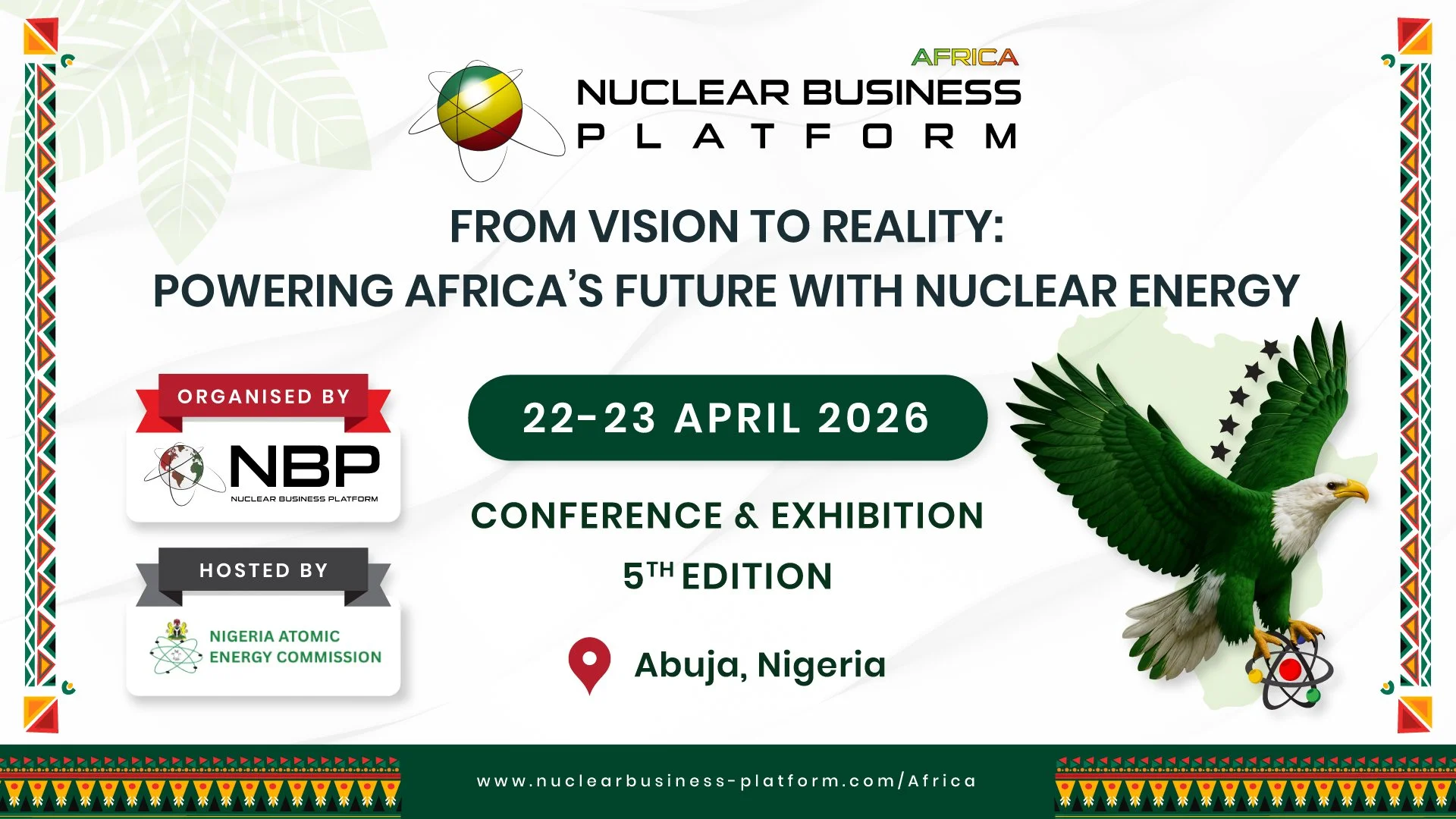
Platforms such as the Africa Nuclear Business Platform 2026, hosted by the Nigeria Atomic Energy Commission in Abuja from 22–23 April 2026, are where vendors, investors, and policymakers converge to shape the deals and partnerships that will ultimately determine how these projects move from pipeline to execution, aligning capital, technology, and regulatory pathways with the continent’s accelerating digital infrastructure demand.
SMRs can be sited directly adjacent to digital infrastructure clusters, delivering firm power to the facilities that need it most without the grid transmission losses and reliability risks that remote generation introduces. Grid instability is consistently cited by operators as the single greatest constraint on African digital infrastructure investment, and the ability to co-locate reliable, clean, high-density nuclear generation with compute infrastructure addresses that constraint at its root. Africa's digital economy will be built on data. The data will run on the compute. The compute will require power that is firm, clean, and continuously available. The structural logic of that chain, examined honestly and without ideological preference, leads with increasing clarity to nuclear energy as the indispensable foundation.