
Malaysia's SMR Opportunity: Why the Window Is Open and Won't Stay That Way
The global race to deploy small modular reactors is accelerating. Vendors are chasing licences, governments are announcing feasibility studies, and capital is beginning to move. For industry operators and utilities evaluating where the first credible SMR deployment outside Western markets will occur, the answer is closer to resolution than most realise. Malaysia is not a country that is considering nuclear power. It is a country that has already done the groundwork and is now deciding whether to act on it.
That distinction matters enormously. Greenfield nuclear markets require a decade of institution-building before a single commercial conversation is worth having. Malaysia skips that queue. What is in front of operators today is not a development opportunity. It is a re-entry market with institutional memory, a trained utility, and a government under mounting pressure to solve an energy problem that renewables alone will not fix.
The Energy Problem No One Wants to Say Out Loud
Malaysia has committed to carbon neutrality by 2050 and has set a target of 70% renewables in its power generation mix by the same year. Those are credible, policy-backed targets. The starting position, however, is anything but favourable. As recently as 2020, fossil fuels accounted for over 96% of Malaysia's primary energy. Natural gas held 42%, crude oil and petroleum 27%, and coal 26%. Renewables sat at under 4%.
Closing that gap through solar and wind alone presents a structural challenge that grid operators understand intuitively. Malaysia's industrial base, its data centre growth trajectory, and its ambitions as a regional manufacturing hub all demand reliable baseload power. Renewables can contribute substantially to the generation mix but cannot anchor it. The only zero-carbon technology capable of providing firm, dispatchable baseload power at scale is nuclear, and in Malaysia's grid context, the most viable form of that technology is the SMR.
The numbers behind this regional ambition are significant. According to Wood Mackenzie, Southeast Asia will require approximately $208 billion in investment to develop 25 GW of nuclear power capacity by 2050, with SMRs emerging as the preferred technology of choice across the region. Malaysia has already staked its position within that build-out, targeting 1.2 GW of SMR capacity by 2035. That deadline was revised from an earlier 2031 target due to regulatory challenges, but the direction of travel has not changed. Economy Minister Rafizi Ramli and Natural Resources Minister Nik Nazmi Nik Ahmad have both indicated publicly that nuclear is firmly back on the agenda.
Why SMRs, and Why Malaysia Can Lead
The case for large nuclear in Malaysia was always complicated by cost, construction timelines, and grid scale. A single gigawatt-scale reactor represents a capital commitment that is difficult to absorb for a mid-sized grid, and the construction risk profile has historically deterred Southeast Asian governments from committing. SMRs change the calculus on both dimensions.
Factory-built modular reactors with passive safety systems are purpose-designed for markets like Malaysia. Construction timelines are shorter, cost curves are descending as vendors move toward series production, and the safety profile is dramatically easier to communicate to a public that has genuine questions about nuclear risk. For a government that needs to demonstrate early progress on a 1.2 GW target, the SMR pathway offers something a large reactor programme cannot: visible, staged momentum.
The Regulatory Foundation Is Already Laid
Nuclear markets fail in the early stages not because of technology risk but because of regulatory vacuum. Vendors cannot engage seriously with a government that has no licensing framework, no liability regime, and no independent regulatory body. Malaysia has been building that foundation for over a decade.
The Malaysia Nuclear Power Cooperation was established in 2011 as a Nuclear Energy Program Implementing Organization (NEPIO) under the Prime Minister's Department. By 2017, Malaysia had completed the requisite Phase 1 studies and demonstrated a working understanding of all 19 nuclear infrastructure issues identified by the IAEA, the international benchmark for programme readiness. The government also introduced an Atomic Energy Regulatory Bill designed to separate nuclear operators from regulators, with a dedicated nuclear liability chapter aligned with the Vienna Convention on Civil Nuclear Liability.
The programme was suspended in 2018 following a change of government, not because it failed any technical or regulatory test, but because the incoming administration made a political decision to halt it. The institutional framework was not dismantled because it was inadequate. It was paused because of politics. The infrastructure exists to be reactivated, not rebuilt, and that distinction saves years off any re-entry timeline.
The Competitive Window and What Operators Should Do With It
The market reality that operators need to internalise is straightforward. The vendors and partners that secure preferred status in Malaysia's nuclear programme will be those already present when the government makes its decision, not those responding to a formal procurement notice after it has been issued. Nuclear is not a conventional tender process. It is a relationship-driven exercise in which early movers hold structural advantages that no late arrival can overcome regardless of technology or pricing.
Malaysia also carries a dimension that extends well beyond its own borders. If Malaysia becomes the first country in Southeast Asia to deploy an SMR, it establishes a regional reference case that changes the commercial conversation in Indonesia, the Philippines, Vietnam, and Thailand simultaneously. Against the backdrop of a $208 billion regional nuclear build-out, the operator that partners with Malaysia on its first deployment does not simply win a Malaysian contract. It wins a position as the reference vendor for the fastest-growing nuclear market region in the world.
The Bottom Line
Malaysia is not a market to monitor from a distance. It is a market to enter now, with deliberate intent and genuine relationship investment. The institutional groundwork is in place. The utility is trained. The government is signalling a 1.2 GW SMR target with a 2035 horizon. The energy problem is real and growing. The competitive window is open, but it will not remain so once the procurement process formalises.
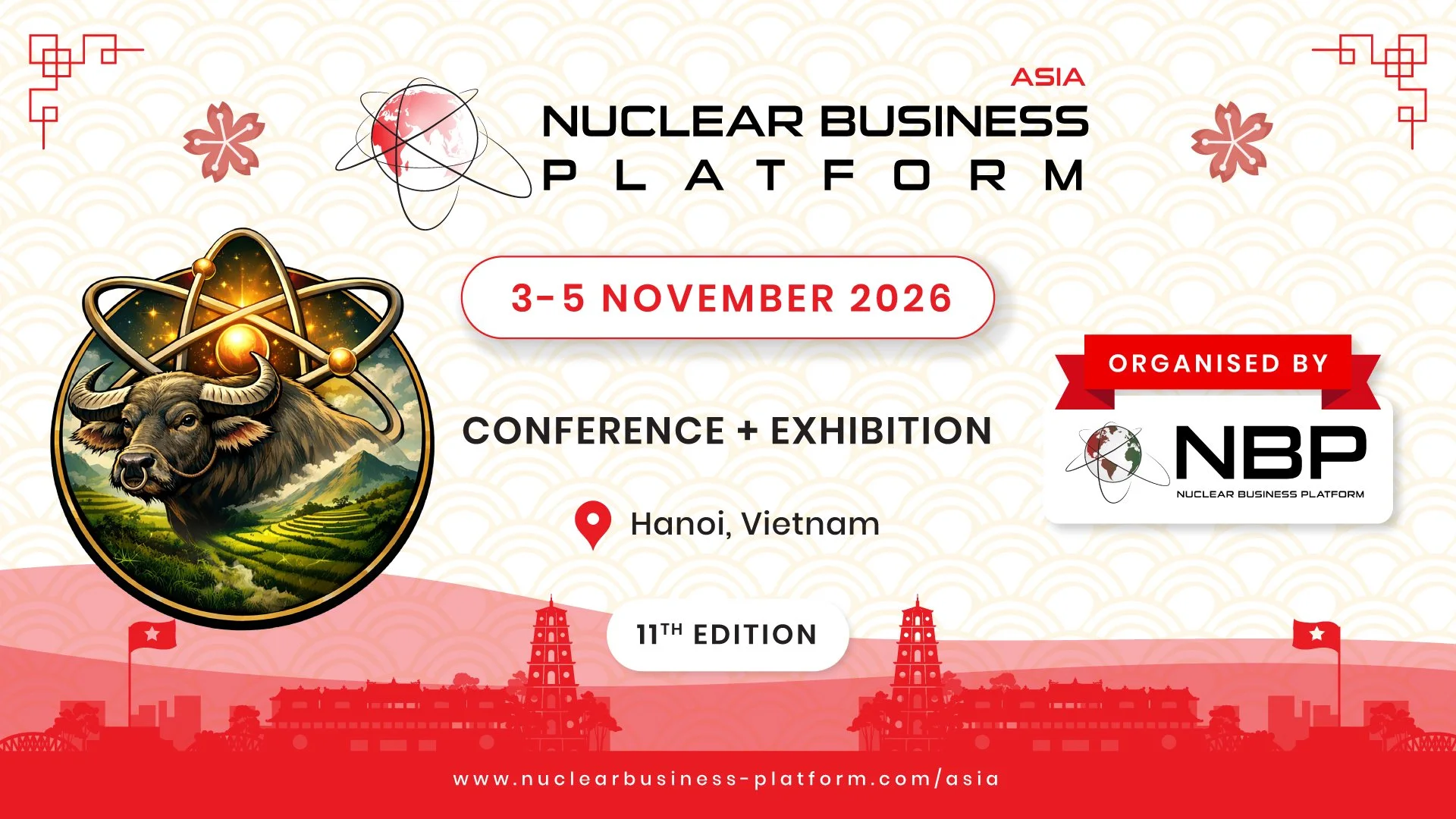
That trajectory will gain further clarity through platforms such as the Asia Nuclear Business Platform 2026, the forum's 11th edition taking place from 3 to 5 November in Hanoi, Vietnam. ANBP 2026 is where policymakers, investors, and vendors are expected to refine the financing structures and partnership models that will shape the region's nuclear build-out. For operators serious about ASEAN, that forum is not optional. It is where positioning becomes visible.
For industry operators and utilities with serious ASEAN ambitions, the question is not whether Malaysia will pursue nuclear. It is whether you will be part of it when it does.