Kenya has moved into the execution phase of a programme that has been years in the making, and the decisions being made today will shape the country's energy landscape for decades. With a confirmed site, a construction timeline, a research reactor in development, and a network of international partnerships in place, Kenya's nuclear energy programme has the structural foundations of a serious national undertaking.
The Siaya County Plant: What We Know
Kenya's first nuclear power plant will be located in Bondo, Siaya County, on the shores of Lake Victoria. Construction is scheduled to begin in 2027, with commissioning targeted for 2034. The facility will have an initial installed capacity of between 1,000 MW and 2,000 MW, at an estimated cost of KSh 500 billion, approximately $3.8 billion.
This project sits within a broader national energy target. Kenya is working to expand its installed electrical capacity from the current 3,300 MW to a minimum of 10,000 MW within the next five to seven years. Nuclear power is expected to contribute at least 3,000 MW of that figure. President William Ruto last week confirmed these targets and underscored the plant's dual purpose: expanding the national grid and creating direct economic opportunity for local communities.
During peak construction, the plant is expected to generate between 5,000 and 12,000 jobs, covering a range from general labour to specialist engineering roles. Once the plant is operational, it will sustain hundreds of permanent, technically skilled positions. For a county like Siaya, this represents a scale of economic activity that goes beyond infrastructure and into long-term structural development.
The Research Reactor: Building Scientific Capacity
Parallel to the main power plant project, Kenya is developing the Kenya Nuclear Research Reactor (KNRR) at Konza Technopolis, south of Nairobi. Expected to become operational in the early 2030s, the KNRR will serve as the country's national platform for nuclear science and applied research.
Its functions will span education and training, medical isotope production, agricultural research, and industrial applications. For Kenya's scientific community and research institutions, the KNRR fills a gap that has long constrained the country's nuclear knowledge base. It will also support the pipeline of technical professionals needed to staff the commercial power plant over the long term. The IAEA conducted an INIR-RR mission in December 2023 specifically to assess the research reactor project, reflecting international recognition of its strategic importance.
International Partnerships: A Diversified Approach
Kenya has deliberately avoided dependence on any single international partner. Instead, it has built a portfolio of bilateral relationships with several of the world's major nuclear nations, each covering different aspects of the programme from regulatory alignment to technology transfer and workforce development.
The United States and Kenya signed a Strategic Civil Nuclear Cooperation MoU in December 2022, addressing policy, energy security, regulation, and industry ties. In September 2024, Kenya's Nuclear Regulatory Authority (KNRA) and the U.S. Nuclear Regulatory Commission (NRC) signed a further agreement focused specifically on regulatory collaboration and safety standards.
Kenya's Nuclear Power and Energy Agency (NuPEA) and the Korea Atomic Energy Research Institute (KAERI) signed a cooperation agreement in September 2025 to advance the KNRR project and strengthen Kenya's nuclear research infrastructure. Earlier agreements with KEPCO, the Korea Nuclear Association for International Cooperation (KNAIC), and KEPCO's International Nuclear Graduate School (KINGS) have covered technical support and specialist training.
China's engagement dates to 2015, when the Kenya Nuclear Electricity Board and China General Nuclear Power Corporation signed an MoU covering training, site selection support, and feasibility studies. Russia formalised cooperation with Rosatom in 2016 on general nuclear technology collaboration, and Kenya has since indicated interest in deepening that relationship across both nuclear and renewable energy. Slovakia adds a European dimension to Kenya's engagement, rounding out a bilateral network that spans multiple continents and competing vendor ecosystems.
This multi-partner strategy is not accidental. It gives Kenya flexibility in its eventual vendor selection, maintains a competitive dynamic between potential suppliers, and reduces the programme's exposure to geopolitical risk. Kenya’s technology outlook is not limited to conventional large-scale reactors. Alongside its flagship nuclear power plant, the country is actively evaluating Small Modular Reactors (SMRs) as part of its long-term energy mix. This interest reflects a broader strategy to maintain flexibility in deployment models, particularly for regions where grid capacity, financing structures, or phased deployment may favour smaller units. Kenya’s commitment to this pathway was underscored in May 2025 when it hosted Africa’s first IAEA SMR School, signalling both policy-level intent and early-stage capacity building around next-generation reactor technologies.The IAEA has provided overarching guidance throughout, conducting its first INIR mission in 2015, a follow-up in 2021, and the more recent INIR-RR mission in December 2023.
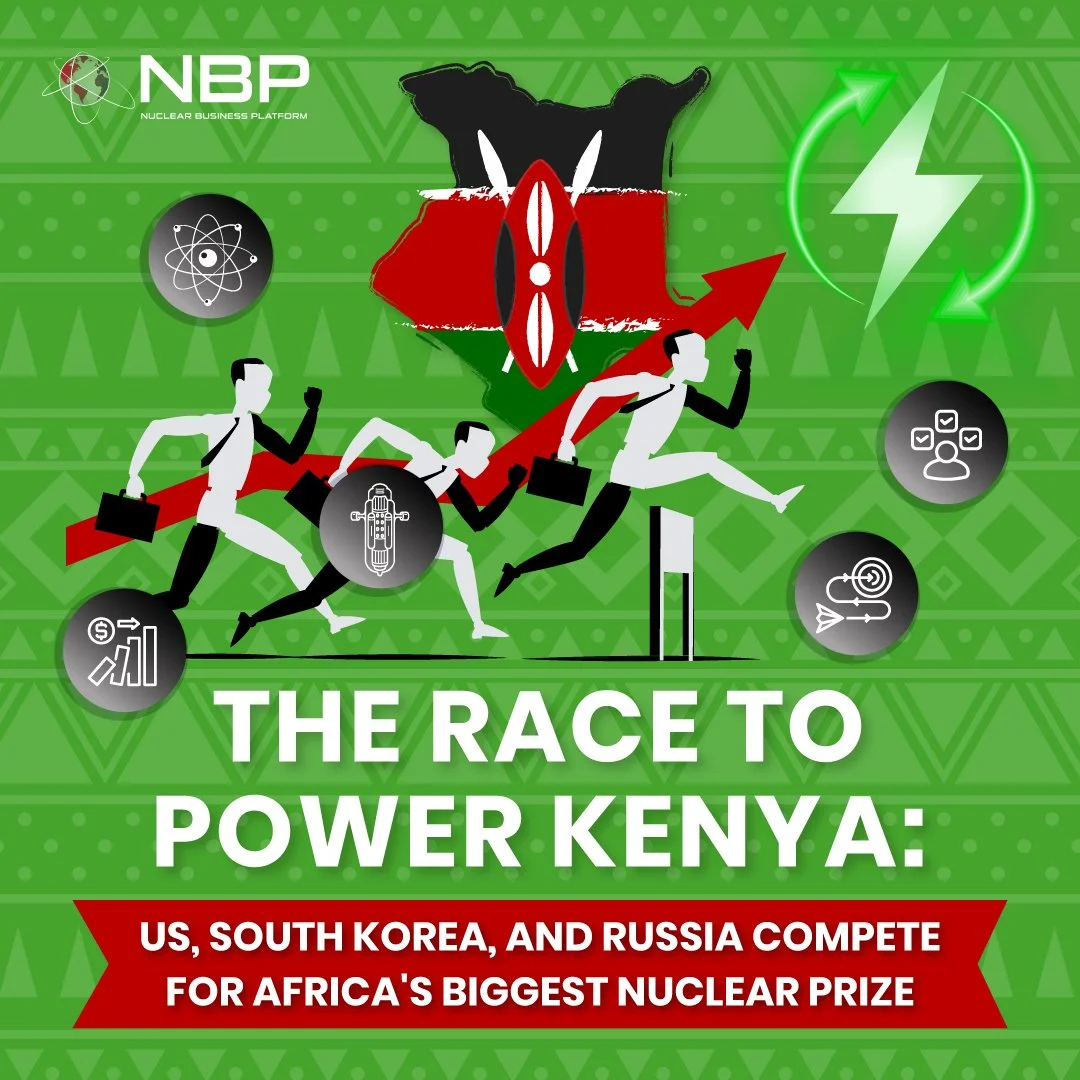
Kenya’s nuclear ambitions have officially accelerated from diplomatic dialogue to a high-stakes global competition. Following a strategic Request for Information (RFI) in July 2025, the nation’s Nuclear Power and Energy Agency (NUPEA) has ignited massive interest from the world’s energy titans, with the United States, South Korea’s KHNP, and Russia’s Rosatom all submitting bids covering both Small Modular Reactors and large-scale technologies. This surge of global expertise has triggered a critical review phase, setting the stage for a definitive Request for Proposal (RFP) by late 2026 that will crown the final partner to break ground on a historic 2027 construction start.
What This Means for the Market
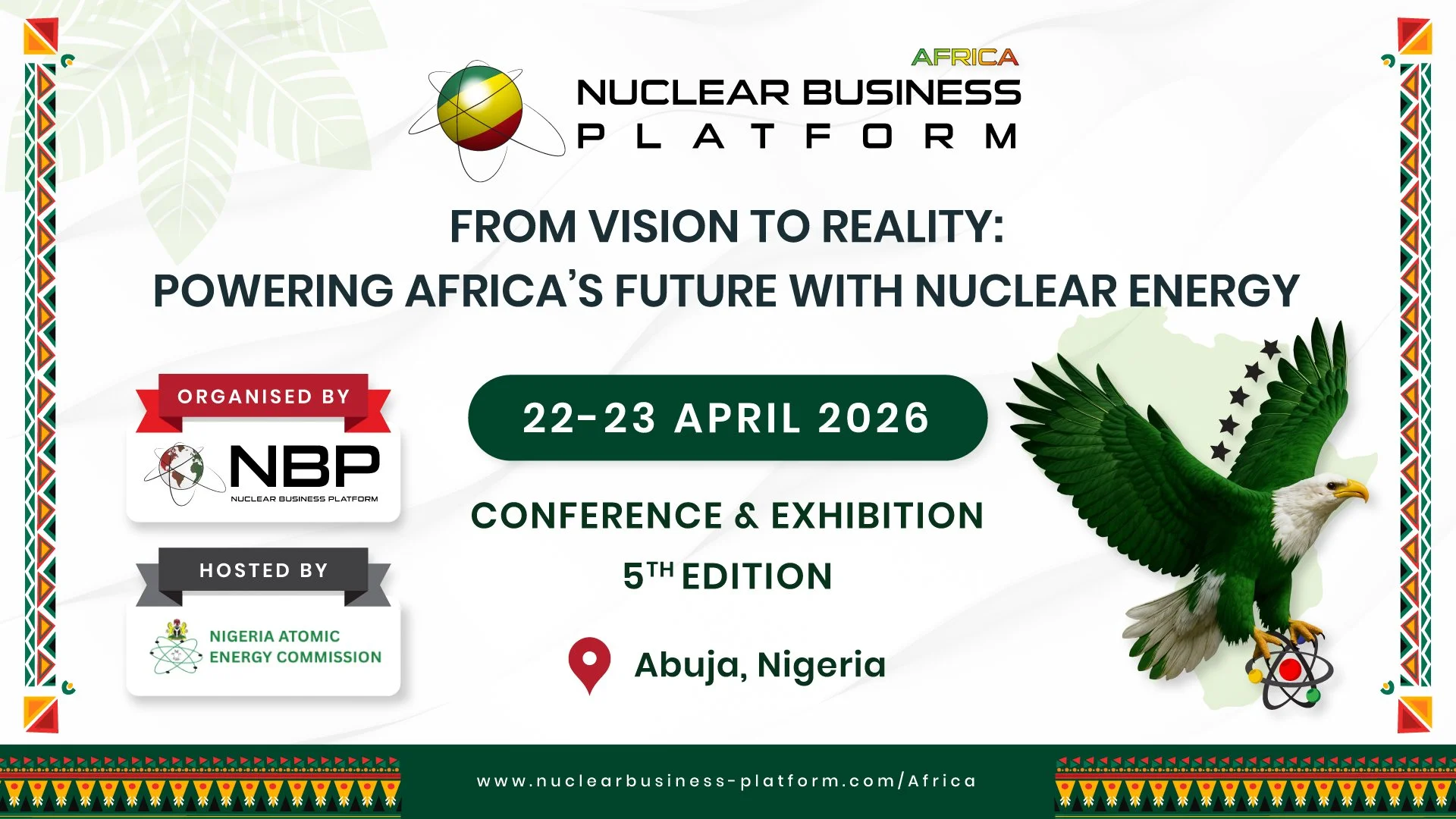
Kenya's nuclear programme now presents a credible commercial pipeline. The construction timeline is set, the regulatory architecture is being built in cooperation with international bodies, and the partnership network is deep enough to support a competitive procurement process. Platforms such as the Africa Nuclear Business Platform 2026, hosted by the Nigeria Atomic Energy Commission in Abuja from 22–23 April 2026, are playing a significant role in advancing such programs.
The next two years, leading up to the 2027 construction start, will be critical. Vendor negotiations, site preparation, financing arrangements, and regulatory approvals will shape Kenya’s energy future. Kenya has done the groundwork. The execution phase has begun, and the decisions made between now and the groundbreaking will define the programme's trajectory for the next decade.