
Vietnam Could Be the First Country in ASEAN to Operate a Nuclear Power Plant. The Evidence Is Getting Hard to Ignore
Vietnam has been the most active nuclear mover in Southeast Asia since the start of 2026. An intergovernmental construction agreement signed. Site clearance and population resettlement launched on the ground. A replacement financing partner secured within months of Japan's withdrawal. And an IAEA Phase 2 nuclear infrastructure review completed, making Vietnam the only country in ASEAN to have reached that milestone. Taken together, these developments point toward a programme that has crossed the line separating countries that are considering nuclear from countries that are building it. Whether Vietnam becomes the first ASEAN nation to operate a nuclear power plant remains to be seen. But right now, no other country in the region is closer to that outcome.
Construction Is No Longer a Future Event
In March 2026, Vietnam and Russia signed an intergovernmental agreement for the construction of Ninh Thuan 1, laying the legal foundation for Vietnam's first nuclear power plant. The plant is planned around two Russian-designed pressurised water reactors built by Rosatom. Shortly after, Deputy Prime Minister Bui Thanh Son attended the launch of the population relocation, resettlement, and site clearance project in Khanh Hoa Province. Land is being cleared. People are being moved. For firms assessing whether Vietnam's programme is real or aspirational, the answer is visible on the ground in Khanh Hoa right now. Ninh Thuan 1 is targeted for commercial operation between 2030 and 2035, contributing to a combined 4,000 to 6,400 MW from both Ninh Thuan plants. Vietnam Electricity has been appointed investor. The total investment attached to the revival of Ninh Thuan 1 and 2 stands at approximately $22 billion.
A Withdrawal, Then a Fast Pivot
Japan formally withdrew from Ninh Thuan 2 in December 2025, citing the tight construction timeline. Rather than pause, Vietnam moved immediately. Within months, a four-party MOU was signed to explore Korean financing for the second plant, bringing together the Export-Import Bank of Korea (Korea Eximbank), the Korea Trade Insurance Corporation (K-Sure), and Korea Electric Power Corporation (KEPCO) alongside Vietnam's state-owned PetroVietnam. The speed of that response matters. Governments that are hedging their nuclear commitment do not move this quickly when a partner exits. Vietnam replaced Japan with a structured Korean financing framework before the market had time to interpret the withdrawal as a setback. For KEPCO and its partners, the MOU is a direct entry point into one of the most commercially significant nuclear procurements currently open in Asia. For other vendors and financiers watching from the outside, it confirms that Ninh Thuan 2's partner position is active and that early engagement is more productive than waiting for formal procurement to open.
The INIR Phase 2 Milestone
In December 2025, the IAEA conducted a Phase 2 Integrated Nuclear Infrastructure Review (INIR) of Vietnam's nuclear programme. The report was delivered to the Vietnamese government in April 2026. Vietnam is the only country in ASEAN to have completed this mission. INIR Phase 2 is conducted when a country is ready to invite bids for its first nuclear power plant and is preparing to commit to construction. Completing it confirms that Vietnam's regulatory institutions, legal framework, human resource development pipeline, and nuclear safety infrastructure have been assessed at the level the IAEA requires for active procurement. It is the institutional credibility benchmark that technology vendors and international financiers need before committing seriously to a programme.
What This Means for the Global Industry
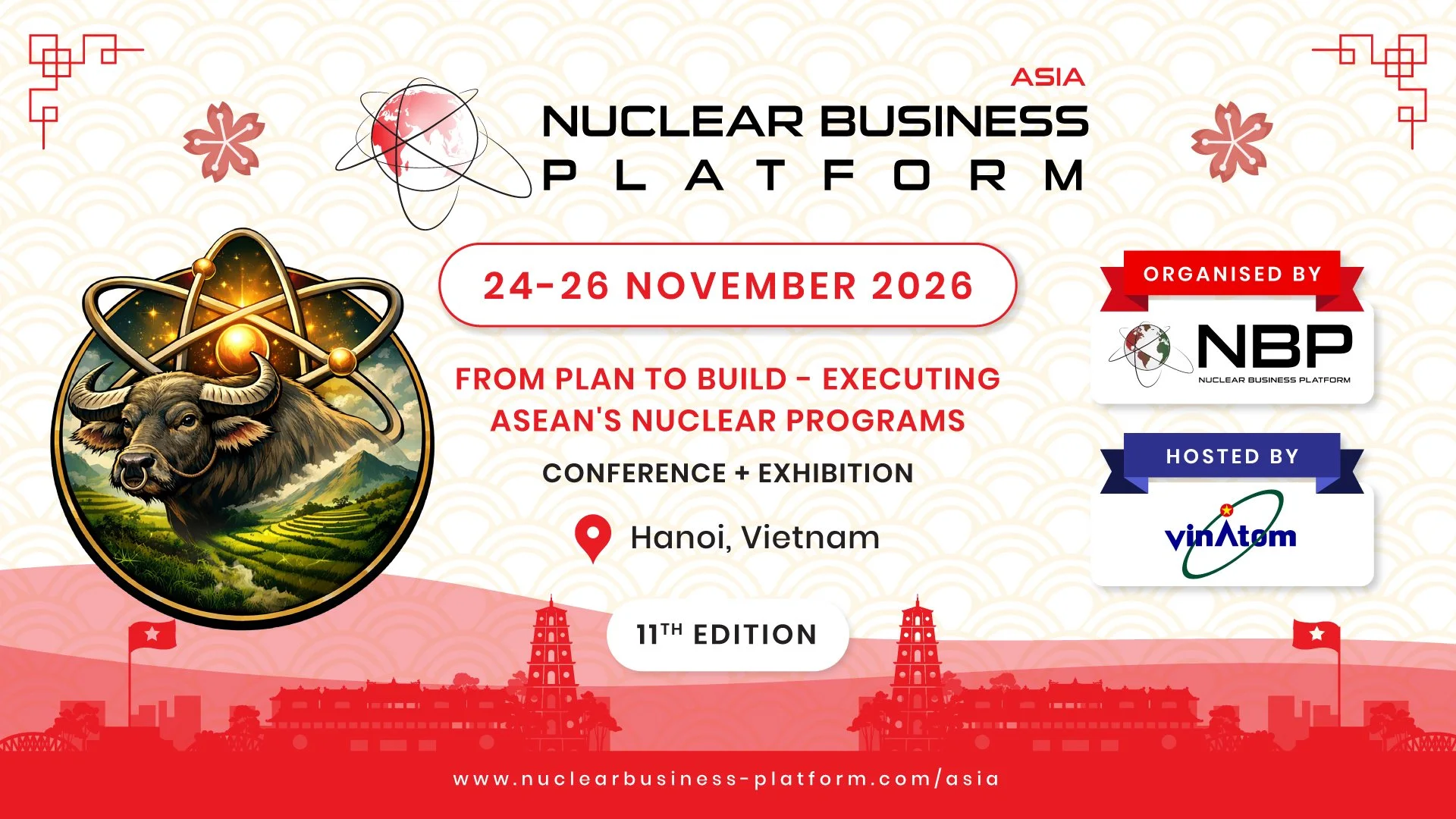
Vietnam's programme has moved faster in 2026 than most observers anticipated. The commercial window that matters most is the one open right now, before procurement frameworks are finalised and positions are locked in. Ninh Thuan 1's Rosatom framework and Ninh Thuan 2's emerging Korean framework create two parallel and distinct supply chain environments, each requiring engineering services, specialist components, regulatory advisory support, and workforce training infrastructure that Vietnamese institutions cannot yet fully provide domestically. NBP's Asia Nuclear Business Platform (ANBP) 2026 takes place from 24-26 November in Hanoi. Vietnam is hosting the region's most important nuclear business forum at precisely the moment its own programme is transitioning from preparation to construction. For firms serious about this market, Hanoi in November is not optional. It is where positioning becomes visible and where the relationships that precede contracts are built.